Sports Sunglasses Test 2026: Comparing the 5 Best Models
Sports Sunglasses Test 2026: The 5 best models compared
Looking for the best sports sunglasses in 2026? We compare five of the most popular polarized sports sunglasses for running, cycling, and outdoor sports – honestly, with strengths and weaknesses.
Good sports sunglasses protect your eyes from UV radiation, wind, dust, and insects, improve your vision through polarization, and stay put even during intense movements. But which glasses deliver on their promises? We’ve put five models to the test.
What matters in sports sunglasses?
Before we dive into the comparison, here are the most important criteria:
UV Protection: UV400 is a must – anything less doesn’t sufficiently protect against UVA and UVB rays. Polarization: Reduces glare from reflections on water, asphalt, or snow. Indispensable for cyclists and runners. Weight: Under 30 grams is ideal – anything more will be noticeable during long sessions. Fit: Non-slip temples and nose pads are crucial. The glasses must not slip when sweating or during rapid movements. Ventilation: Good air circulation prevents fogging, especially with changing temperatures.
The 5 best sports sunglasses of 2026 compared
1. Livadora v7 Pro – Best All-rounder
The Livadora v7 Pro is our test winner for all-round use. At just 28 grams, it is one of the lightest sports sunglasses on the market. The Horizon 4D™ lens technology provides polarized lenses with optimized color and contrast recognition. The FibreFrame™ frame made of TR90 polyamide is ultra-flexible and practically unbreakable.
Strengths: Extremely lightweight (28g), excellent polarization, non-slip rubberized temples, six color variants, strong price-performance ratio thanks to the 2-for-1 deal (€59.90 instead of €79.90). Weaknesses: No photochromic lenses (the V8 Pro has them), no interchangeable lens system. Ideal for: Running, cycling, hiking, outdoor sports, leisure.
2. Livadora v7 Edge – Maximum field of vision
The Livadora v7 Edge is the choice for anyone who wants maximum protection. The extra-wide, aerodynamic visor covers the entire eye area and protects against side wind, dust, and insects. Same technology as the V7 Pro, but with significantly more coverage.
Strengths: Largest field of vision in this price range, very good wind protection, same quality as V7 Pro. Weaknesses: The large visor is not everyone's taste, slightly less ventilation than the Pro. Ideal for: Road biking, gravel biking, mountain biking, windy conditions.
3. Livadora V8 Pro – Next Generation
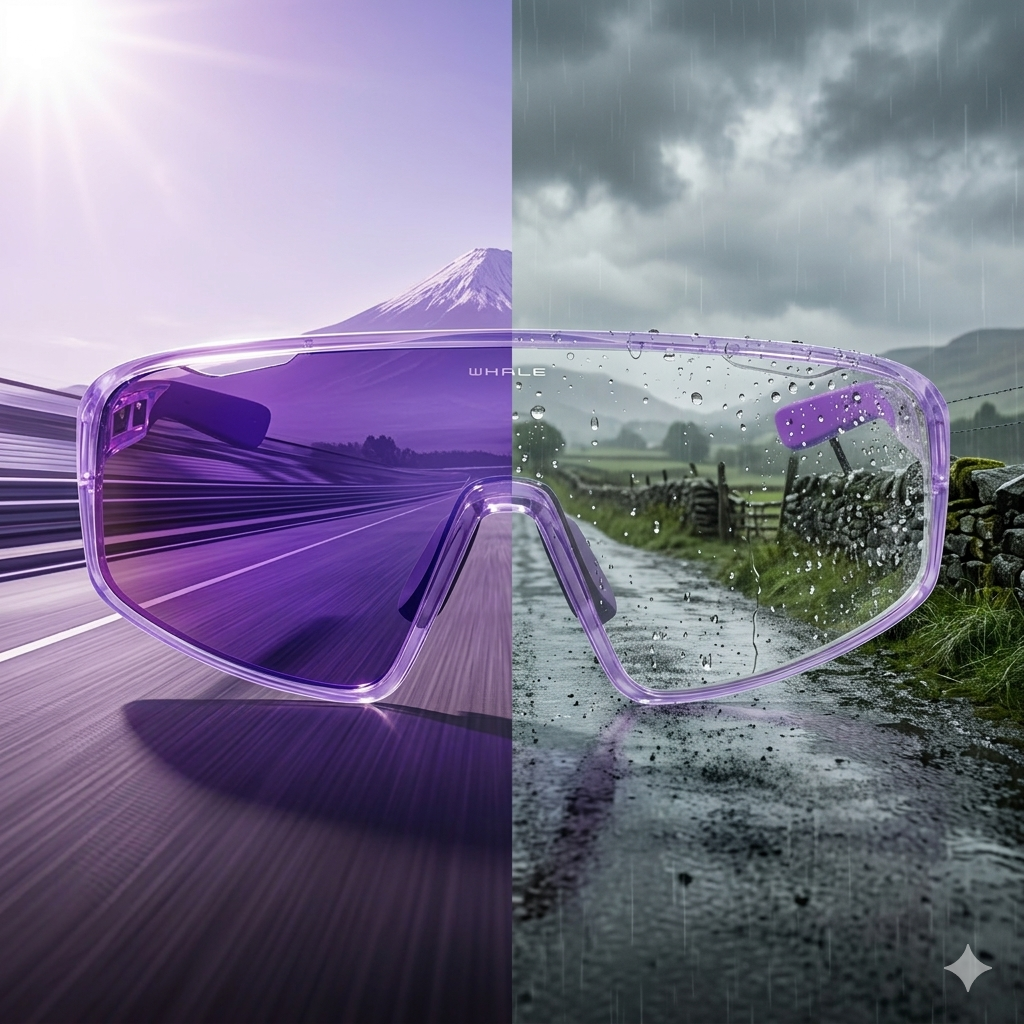
The Livadora V8 Pro is the latest model and is the only pair of glasses in the test to offer optional photochromic lenses that automatically adapt to light. It also features an integrated ventilation system to prevent fogging and a hydrophobic coating that repels water and sweat.
Strengths: Photochromic option (adapts automatically), anti-fog ventilation system, hydrophobic coating. Weaknesses: Still new on the market, fewer color options than the V7 series. Ideal for: Changing light conditions, long rides, trail running.
4. Oakley Sutro Lite
The Oakley Sutro Lite is a classic among cycling glasses. Oakley's Prizm lens technology offers excellent contrast. The glasses fit well and undoubtedly look cool on a road bike. However, quality at Oakley comes at a price.
Strengths: First-class Prizm optics, cult brand in cycling, many color options. Weaknesses: Significantly more expensive (€150-200), frame less flexible than TR90 alternatives, no 2-for-1 deals. Ideal for: Cycling enthusiasts with a higher budget.
5. POC Aspire
The POC Aspire stands out with its Scandinavian design and Carl Zeiss lenses. The glasses offer a large field of vision and good protection. POC is particularly popular in the mountain bike scene and known for high-quality workmanship.
Strengths: Carl Zeiss optics, modern design, good side protection. Weaknesses: Pricey (€180-220), heavier than the competition, nose pad sometimes too wide for narrow faces. Ideal for: MTB, gravel, design-conscious athletes.
Sports Sunglasses Comparison Table 2026
| Model | Weight | UV400 | Polarized | Photochromic | Price |
|---|---|---|---|---|---|
| Livadora v7 Pro | 28g | ✓ | ✓ | ✗ | 59,90€ |
| Livadora v7 Edge | 30g | ✓ | ✓ | ✗ | 59,90€ |
| Livadora V8 Pro | 29g | ✓ | ✓ | ✓ | ab 69,90€ |
| Oakley Sutro Lite | 33g | ✓ | Optional | Optional | 150-200€ |
| POC Aspire | 36g | ✓ | ✗ | Optional | 180-220€ |
Our Conclusion: Which Sports Sunglasses Should You Buy?
Best All-rounder: The Livadora v7 Pro offers the best overall package of weight, optics, protection, and price. Thanks to the 2-for-1 deal, you get two pairs of glasses for the price of one – ideal for having a spare pair for changing conditions.
Maximum Protection: The v7 Edge for those who need an extra wide field of vision and maximum wind protection.
Future-proof: The V8 Pro with photochromic lenses – buy once, see perfectly in any light.
Premium Budget Available: Oakley Sutro Lite, if you're willing to pay three times the price and love the brand.
Frequently Asked Questions
Which sports sunglasses are the best in 2026?
In our test, the Livadora v7 Pro performed best as an all-rounder. It combines polarized UV400 lenses, a weight of only 28 grams, and an unbeatable price of €59.90 in the 2-for-1 deal.
Do I need polarized sports sunglasses?
Yes, especially when cycling and running. Polarized lenses eliminate glare from reflections on asphalt, water, or cars. This not only improves comfort but also safety. Learn more in our guide to polarized sports sunglasses.
What is the difference between photochromic and polarized?
Polarized lenses reduce glare and are always tinted the same. Photochromic lenses automatically adjust to light conditions – lighter in cloudy weather, darker in sun. The Livadora V8 Pro offers both options to choose from.
How much should good sports sunglasses cost?
Quality sports sunglasses with UV400 and polarization start from €50-€70. Premium brands like Oakley or POC cost €150-€220. The biggest jump in quality is between €30 and €60 – above that, you're mainly paying for the brand.