
Photochromatic vs. Polarized: Which Lenses Are Better?
Photochromic vs. Polarized: Which Lenses Are Better for Your Sports Glasses?
Short answer: Polarized lenses are ideal for consistent light conditions (sunny days, water, snow). Photochromic lenses are better for changing conditions (mix of forest and sun, cloudy days, long rides). Ideally, you have both.
When buying sports glasses, you face a choice: photochromic or polarized? Both technologies improve your vision, but in completely different ways. In this guide, we explain the difference, the pros and cons, and help you make a decision.
What are polarized lenses?
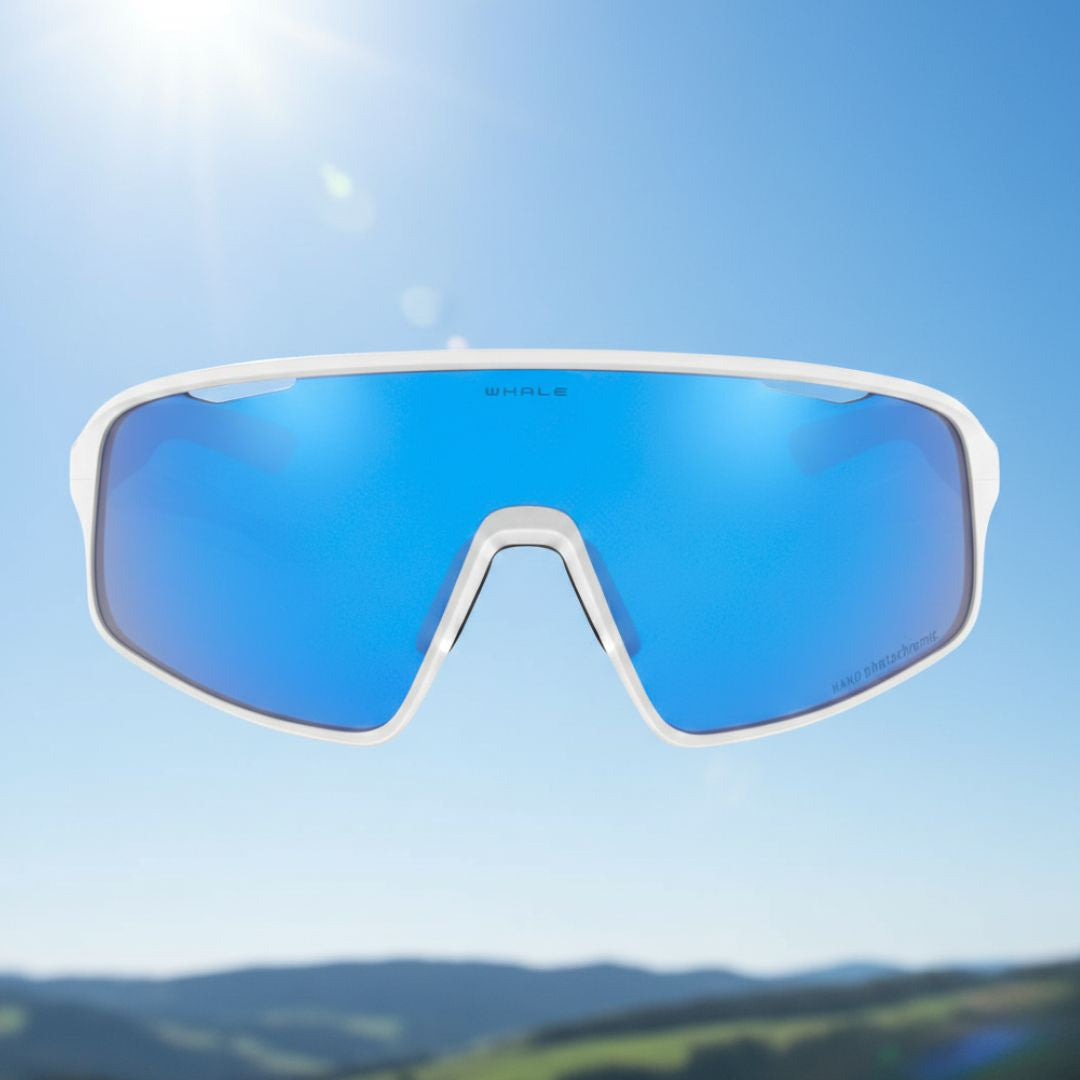
Polarized lenses contain a special filter that blocks horizontally reflected light. This reflected light comes from smooth surfaces such as water, asphalt, snow, or car roofs and is perceived as glare.
The effect: You see with more contrast, sharper, and without annoying glare. Colors appear richer, and details become clearer. This is particularly a safety gain in sports—you recognize obstacles, potholes, or other athletes earlier.
All sports glasses in the Livadora v7 Series come standard with polarized lenses and our Horizon 4D™ technology.
What are photochromic lenses?
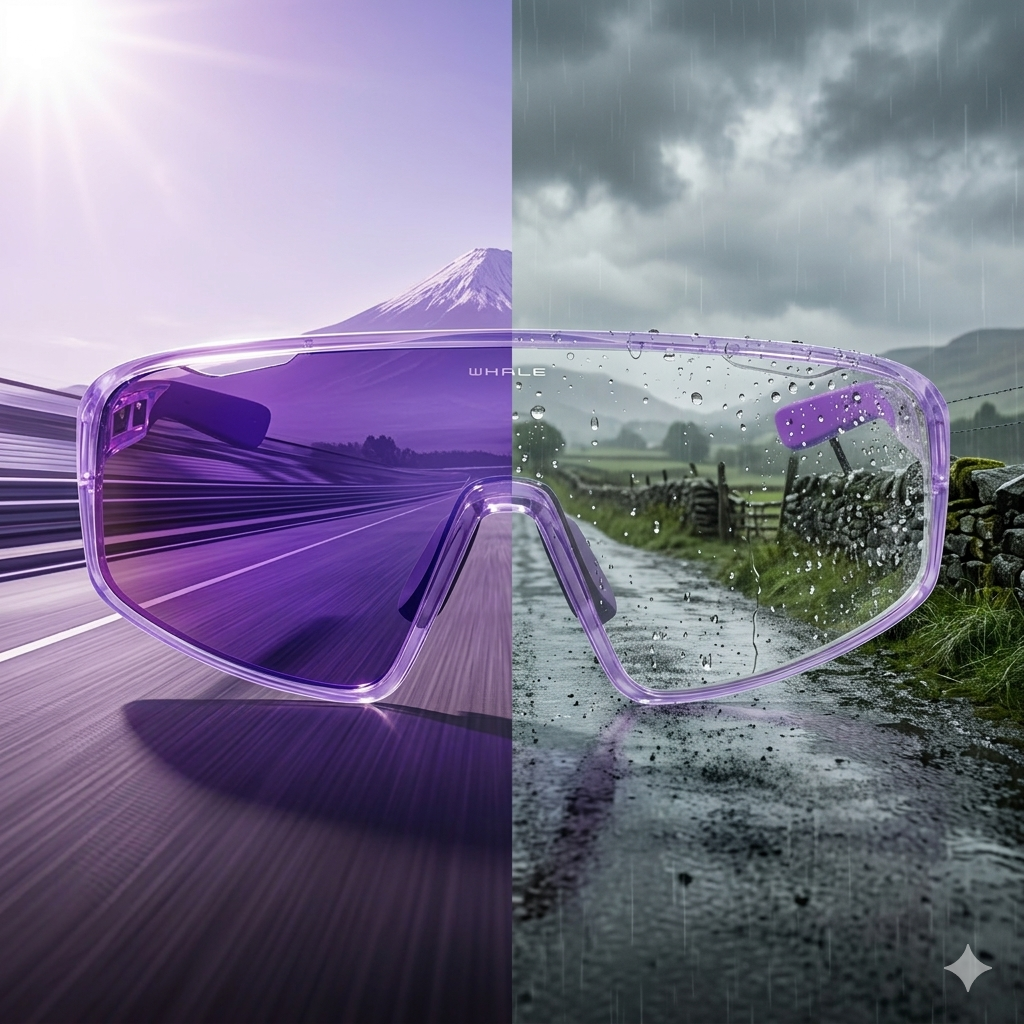
Photochromic lenses (also called self-tinting) react to UV light and automatically change their tint. In strong sunlight, they darken; in cloudy conditions or shade, they lighten. The adjustment takes 15-60 seconds, depending on the technology.
The advantage: You don't need different lenses for different conditions. Whether you start in the shade in the morning and run in bright sunshine at noon—the glasses adapt.
The Livadora V8 Pro is the only model in our collection that offers photochromic lenses as an option.
Polarized vs. Photochromic: The direct comparison
| Feature | Polarized | Photochromic |
|---|---|---|
| Glare protection | Excellent ✓✓ | Good ✓ |
| Adaptation to light | Fixed tint | Automatic ✓✓ |
| Contrast | Very high ✓✓ | High ✓ |
| Changing conditions | Limited | Excellent ✓✓ |
| Price | More affordable | More expensive |
| Reaction time | Instant | 15-60 sec. |
Which lenses for which sport?
Running
Recommendation: Polarized. When running, light conditions are usually relatively constant—you're outdoors, the sun is shining (or not). Polarized lenses give you the best glare protection on asphalt and maximum contrast. The v7 Pro is perfectly suited for this. For trail running with frequent changes between forest and open areas, photochromic lenses like those of the V8 Pro are the better choice.
Cycling
Recommendation: Photochromic for long rides, Polarized for sunny days. On the bike, light conditions change quickly—tunnels, forests, open roads. Photochromic lenses adapt automatically. For purely sunny rides, polarized lenses are ideal due to better glare protection on asphalt.
Skiing & Snowboarding
Recommendation: Photochromic. In the mountains, conditions constantly change—sun, clouds, shade, fog. Our Arc ski goggles offer a photochromic visor (Arctic Sky) that automatically adapts. Plus: Thanks to the MagSnap™ magnetic system, you can change the visor in 2 seconds.
Hiking & Outdoor
Recommendation: Polarized. When hiking, you are usually in similar light conditions for longer periods. Polarized lenses offer the best protection against glare from water, rocks, and snowfields.
Can you have photochromic AND polarized lenses?
Yes, but it is technically challenging and therefore expensive. Some premium manufacturers offer lenses that combine both technologies. In everyday life, the more pragmatic solution is: Two pairs of glasses for different conditions. With the Livadora 2-for-1 deal, for example, you get a polarized v7 Pro for sunny days and use the V8 Pro with photochromic lenses for changing conditions.
Our Conclusion
There is no "better"—only "better suited." Polarized lenses are the right choice for most athletes on most days. Photochromic lenses are worthwhile if you are often in changing light conditions or want only one pair of glasses for everything.
Frequently Asked Questions
Can photochromic lenses also be used at night?
Limited. Photochromic lenses become almost clear in low UV light but still have a minimal residual tint. For sports in the dark, we recommend clear protective glasses.
Do polarized lenses lose their effectiveness over time?
High-quality polarized lenses (like Livadora's Horizon 4D™ lenses) retain their polarization for many years. Cheap adhesive filters can peel off over time.
Why are photochromic lenses more expensive?
The production of photochromic lenses is more complex. The light-reactive molecules must be evenly distributed in the glass to ensure a homogeneous tint. This requires more precise production processes.
.%20Photochromic%20lenses...)