Polarized Sports Glasses: What Does Polarization Really Do?
"Polarized" is written on almost every pair of sports glasses – but what does that actually mean? In this article, we explain how polarization works, when it's useful, and when it's not.
How Polarization Works
Light normally travels in all directions. When sunlight hits a smooth surface (water, wet road, snow), it is predominantly reflected horizontally. This horizontally reflected light is what we perceive as glare.
Polarized lenses have a filter that blocks horizontally oscillating light. Imagine it like a venetian blind with vertical slats: Vertical light passes through, while horizontal light (glare) is stopped. The result: higher-contrast, more comfortable vision without glare.
When Polarization Makes a Real Difference
Cycling on wet roads: After rain, the asphalt reflects the sun intensely. With polarized lenses, you can see potholes and broken glass that you might miss in the glare without polarization. More in our Cycling Glasses Guide.
Running in low sun: In the morning and evening – exactly when most people run – the sun is low. Polarized lenses take the sting out of the glare.
Water sports: The biggest game changer on the water. You can suddenly see below the surface of the water.
Hiking and trail running: In the mountains, snow reflects up to 80% of UV light.
When Polarization Is Less Effective
In very cloudy conditions with no direct reflections, polarization is unnecessary. When looking at phone displays, polarized lenses can be disruptive – some screens appear dark at certain angles. Rarely relevant for sports.
Polarized vs. UV Protection: Don't Confuse Them
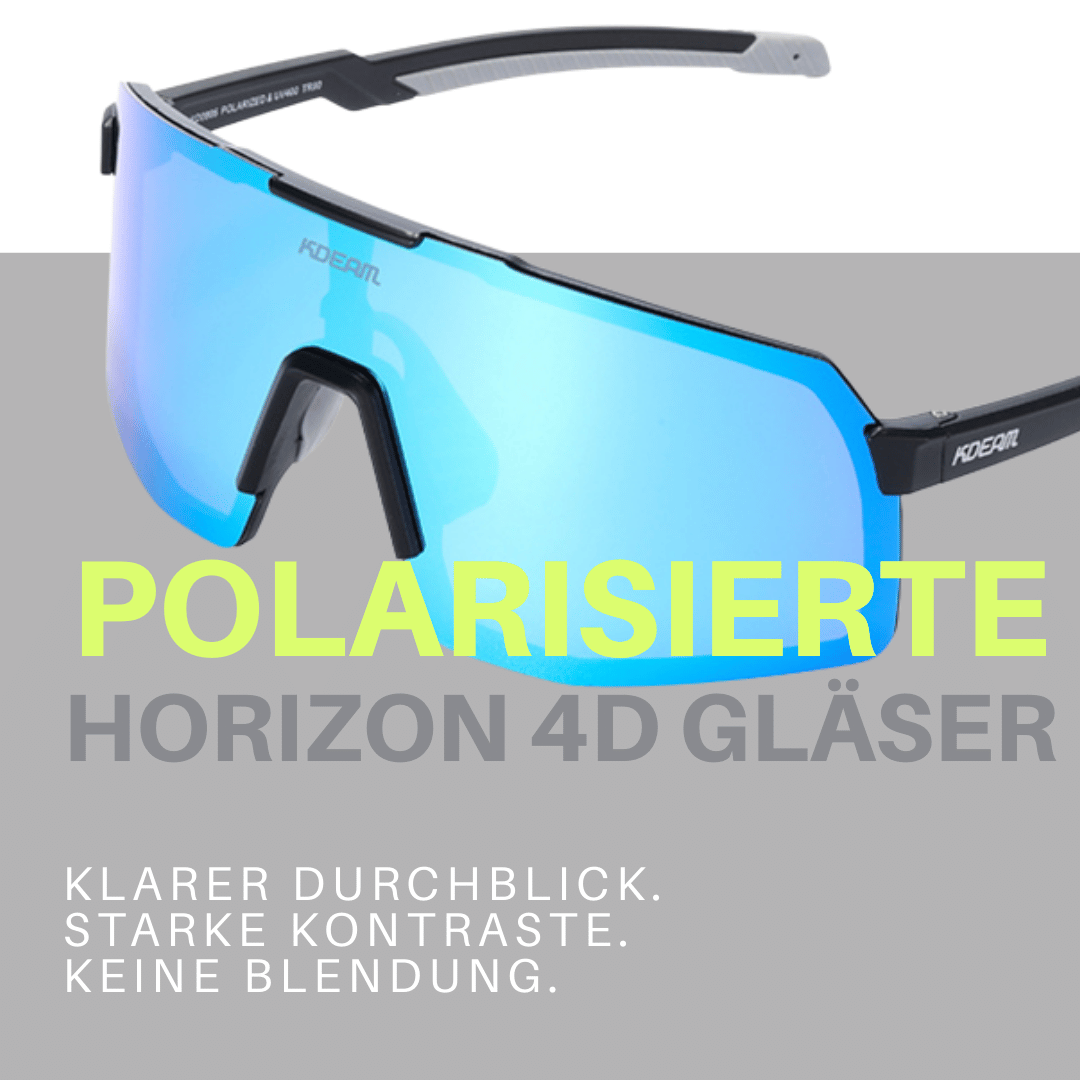
Polarization reduces glare. UV400 protection blocks ultraviolet radiation. You need both – polarized glasses without UV protection would even be dangerous, because dark lenses dilate the pupils.
All Livadora sports glasses combine polarized lenses with UV400 protection.
Frequently Asked Questions
Are polarized lenses darker than normal ones?
Not necessarily. The tint is independent of polarization. Polarized lenses are available in various tint levels.
Can polarization interfere with driving?
In rare cases, rainbow patterns on tinted car windows. Not an issue for sports.