Best Sports Glasses 2026: Buyer's Guide & Recommendation | Livadora
Do you want to find the best sports glasses for your training, but the selection is huge? Between polarization, UV protection, lens colors, and fit, it's easy to lose track. In this guide, you'll learn which features good sports glasses really need – and which are just marketing bluster.
These 6 features are essential for good sports glasses
1. UV400 Protection – Non-negotiable
UV400 means that the lenses block all wavelengths up to 400 nanometers – meaning both UVA and UVB radiation completely. This is the highest standard. Without this protection, you risk long-term damage to your cornea and retina, even on cloudy days. Make sure that "UV400" is explicitly stated, not just "UV protection" – because that could also just mean UV380.
2. Polarized Lenses
Polarized lenses filter horizontally reflected light, which causes intense glare, especially on wet roads, water surfaces, and snow. For outdoor athletes, polarization is a huge gain in comfort: your eyes tire less, contrasts become sharper, and you can recognize unevenness on the ground much better.
3. Lightweight
Sports glasses that you wear for hours should weigh a maximum of 30 grams. Anything more will press on your nose and leave marks. The lightest models weigh 25-28 grams – light enough that you forget you're wearing them after a few minutes.
4. Non-slip Fit
When running and cycling, you sweat. Good sports glasses have rubberized temples and a soft silicone nose pad that won't slip even when wet. The best way to test this is to quickly tilt your head down – the glasses should stay where they are.
5. Anti-Fog Coating
Fogged lenses are not only annoying but dangerous – especially on a bike. Anti-fog coatings prevent condensation on the inside of the lenses. In combination with good ventilation, visibility remains clear even in cold temperatures.
6. Wide Field of Vision
Narrow lenses may be fashionable, but for sports, you need a wide peripheral field of vision. Cyclists, in particular, need to be able to perceive traffic from the side. Models with a continuous visor design offer the best panoramic field of vision.
Sports Glasses vs. Regular Sunglasses
Fashionable sunglasses slip during movement, offer no lateral wind protection, and fog up quickly. Sports glasses are specially designed for intense activities: with an unbreakable frame, aerodynamic design, and features like anti-fog and a non-slip fit.
Our Recommendation: The Livadora v7 Series
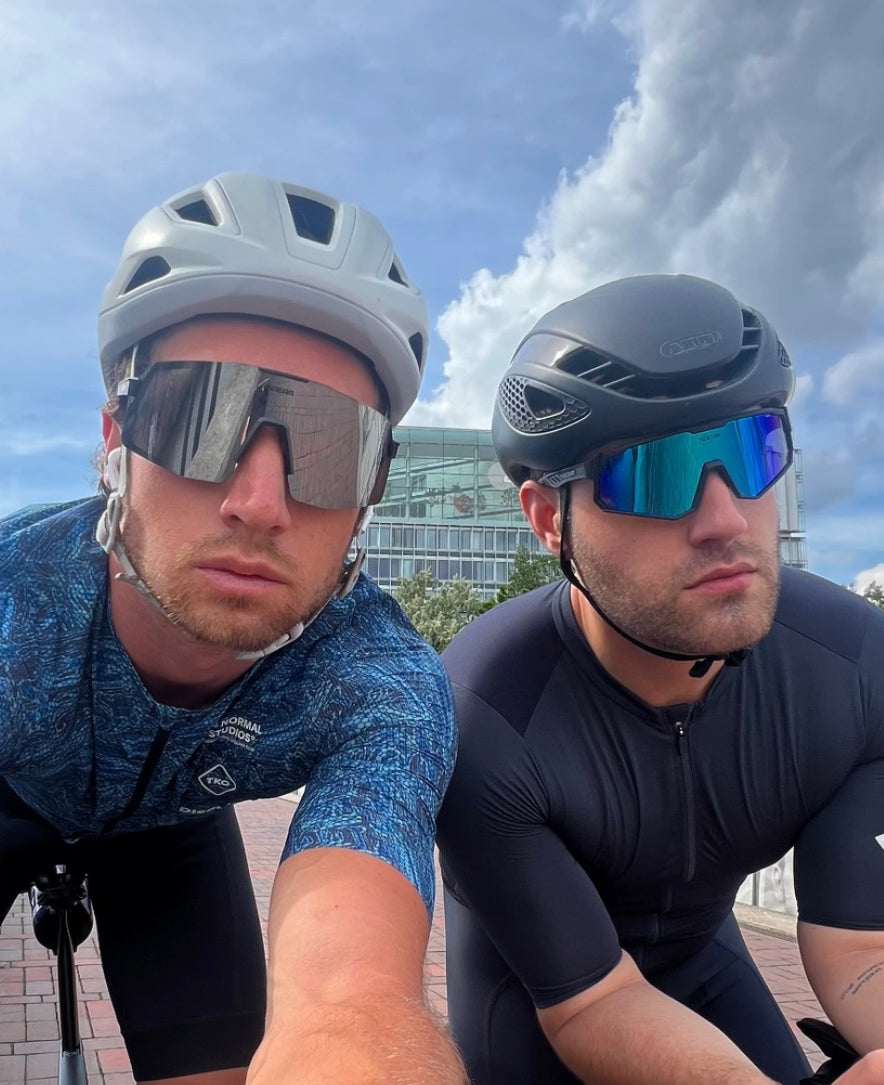
We developed the v7 series precisely according to the criteria mentioned above: UV400 protection, polarized lenses, only 28 grams, rubberized temples with a silicone nose pad, and anti-fog coating. Over 12,500 athletes already use the v7 for running, cycling, and outdoor training.
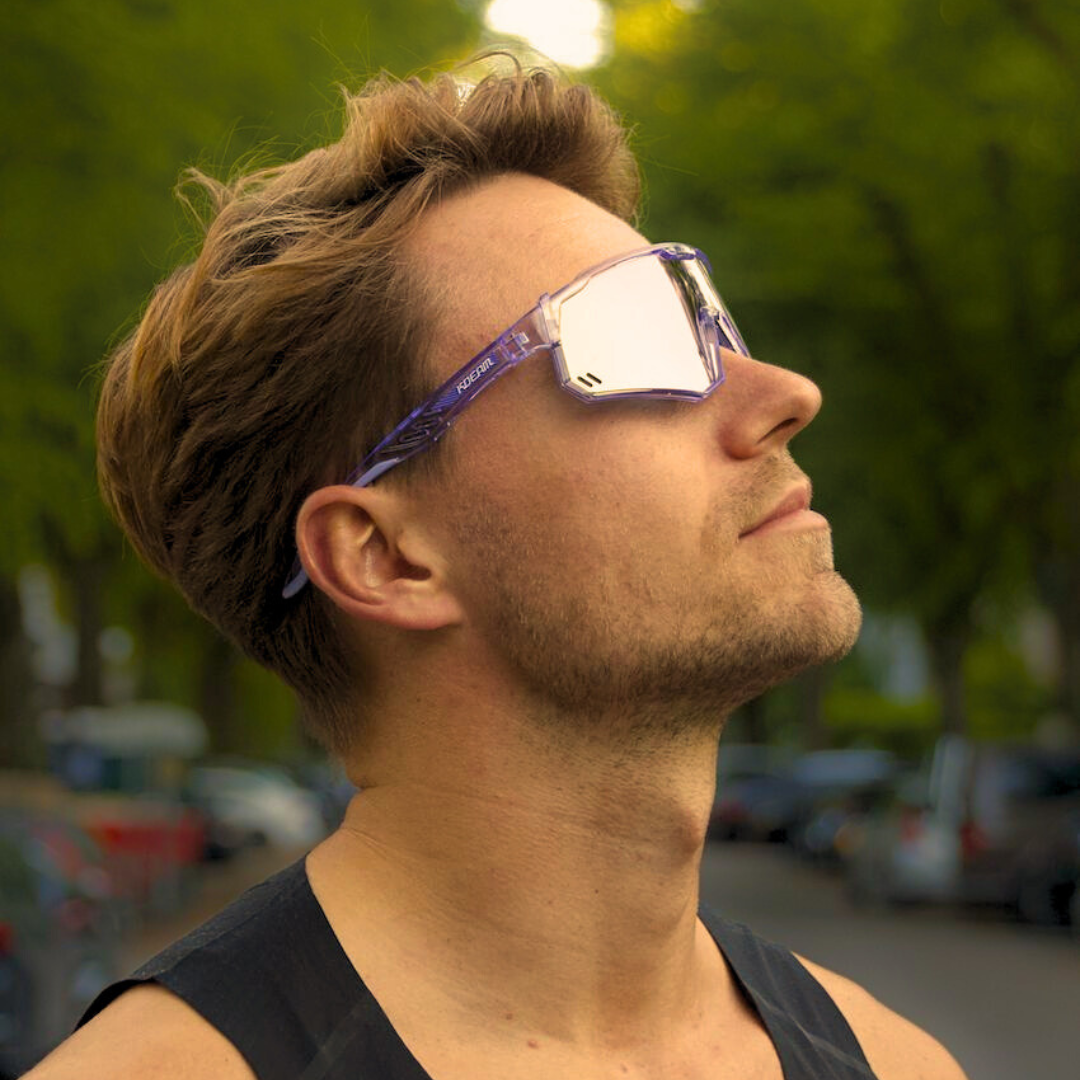
The v7 Edge is particularly suitable for cyclists thanks to its extra-wide field of vision, while the v7 Pro is most popular with runners due to its sporty-urban design.
Frequently Asked Questions
How much do good sports glasses cost?
Between 50 and 80 euros, you can already get very good quality with UV400, polarization, and a lightweight frame. Over 150 euros, you usually pay for the brand name, not for better functionality.
Do I need different sports glasses for different sports?
Not necessarily. Good all-round sports glasses with polarized lenses, UV400, and a non-slip fit work for running, cycling, hiking, and most outdoor sports.
Can I also wear sports glasses as sunglasses?
Yes. Modern sports glasses no longer look like clunky safety goggles. Models like the v7 Pro combine sporty function with urban design and also work for everyday wear.