Which ski goggle lens for which weather? Colours and categories
Which ski goggles you need depends on the light: a dark category S3 lens for sunshine, a medium S2 lens for changing cloud, and a light S1 lens in yellow or orange for fog, snowfall or flat light. Under floodlights, a clear category S0 lens is right. If you don't want to swap, go for a self-tinting lens or ski goggles with two lenses.
Below you'll find the categories S0 to S4 according to the standard, the right colour for every kind of weather and honest answers about self-tinting and polarised lenses. We also look at whether a visor helmet can replace ski goggles.
Cheat sheet: which ski goggle lens for which weather?
| Weather | Cat. | Lens colour |
|---|---|---|
| Sun, blue sky | S3 | grey, brown, mirrored |
| Sun and cloud | S2 | orange, red, brown |
| Overcast, diffuse light | S1 or S2 | orange, pink, yellow |
| Fog, snowfall | S1 | yellow, orange |
| Floodlights, dusk | S0 | clear, light yellow |
| Glacier, high mountains | S4 | grey, brown, mirrored |
| Constantly changing weather | S1–S3 | photochromic |
The category determines how much light reaches your eyes. The colour affects how clearly you see contrast in the snow. Manufacturers' colour names such as ‘Fire’ or ‘Ice’ aren't standardised; what matters is the stated category.
What do the ski goggle categories S0 to S4 mean?
The category tells you how much visible light a lens lets through: S0 more than 80%, S1 43 to 80%, S2 18 to 43%, S3 8 to 18% and S4 only 3 to 8%. The higher the number, the darker the lens. This is set out in the standard for downhill ski and snowboard goggles, EN ISO 18527-1 (ISO 18527-1 preview, Table 1).
| Level | Lets through | Typical for |
|---|---|---|
| S0 clear | over 80% | floodlights, heavy cloud |
| S1 light | 43–80% | overcast days, fog |
| S2 medium | 18–43% | sun with cloud |
| S3 dark | 8–18% | sunny slopes |
| S4 very dark | 3–8% | sun on the glacier |
The weather recommendations match those of the German Board for Good Vision, Kuratorium Gutes Sehen (KGS guide to winter sports eyewear). Many manufacturers write CAT.3 instead of S3; it's the same level. For self-tinting lenses, the standard says two categories are given, one for the lightest and one for the darkest state, for example S1–S3.
For most ski days in the Alps, S2 and S3 are enough. Category S4 is a special case for extremely bright light on glaciers and in high mountains.
Which lens colour for which weather?
Sun and blue sky: dark and often mirrored
On sunny days, go for an S3 lens in grey or brown, often with a mirror coating. The snow reflects a lot of light, and with a lens that's too light you squint and tire more quickly. Grey and brown distort colours only slightly.
Sun and cloud: a medium tint
When sun and cloud alternate, an S2 lens is the best compromise. An S3 lens is often too dark in the shade of the clouds, and an S1 lens too light in the sun. Orange, red or brown base tints bring out the contours in the snow.
Best lens colour for flat light, fog and cloud
In fog, snowfall and flat light, a light S1 lens in yellow or orange helps. It lets plenty of light through and enhances contrast, so you spot bumps and dips earlier. In flat light there are no shadows, and the slope blurs into one white surface. A dark S3 lens makes this even worse.
No lens can make thick fog see-through, though. Ski more slowly in poor visibility and stay near the edge of the piste with its marker poles or trees, where you have reference points.
Night skiing and floodlights: clear or very light
Under floodlights you need a clear S0 lens or a very light lens. Every bit of light counts; a category S2 or S3 sun lens is out of place in the evening. A self-tinting lens only helps here if it becomes almost clear in its lightest state, meaning it starts at category 0.
Glaciers and high mountains: category 4
On a glacier in sunshine, category S4 makes sense; on normal pistes S3 is enough. S4 lenses are so dark that they quickly become too dark in cloud or shade. When real glacier glasses are worth it is explained in the article Ski goggles or sports glasses.
What are mirrored ski goggles good for?
A mirror coating reflects part of the light at the outer surface of the lens and so reduces glare. It's common on dark lenses for sunny days. But the mirror colour you see from outside isn't the colour you look through. A blue mirrored lens can be tinted grey or brown on the inside.
Besides colour and mirror coating, the shape of the lens also affects how you see. What spherical and cylindrical mean is explained in our guide Spherical vs cylindrical ski goggles.
Tint isn't UV protection
How dark a lens is says nothing about its UV protection. The Kuratorium Gutes Sehen points this out too. So a light yellow lens can offer full UV protection just like a dark one; what matters is the UV400 label together with the CE mark.
This is especially important in the mountains, because UV radiation increases with altitude and snow reflects a lot of it. That's why your light lens for dull days needs full UV protection too. What exactly UV400 means is explained in the article UV400 explained simply.
Self-tinting ski goggles: is a photochromic lens worth it?
A self-tinting (photochromic) lens is worth it if you ski in changing light and don't want to swap lenses. It darkens under UV radiation and lightens again when the UV decreases. This lets it cover several categories, such as S1–S3.
What does photochromic 1–3 or 0–4 mean?
The numbers give the lightest and the darkest category. A 1–3 lens ranges from light for dull days to dark for sunshine, a 0–3 lens also becomes almost clear, and a 0–4 lens even reaches glacier level in its darkest state. Above all, make sure the lens reaches at least S3 for sunny days.
Where photochromic lenses reach their limits
- Speed: According to Spektrum's Lexicon of Optics, photochromic lenses darken quickly but lighten again more slowly. Cold and warmth affect both.
- High-altitude sun: In a test of self-tinting ski goggles by the Austrian consumer magazine Konsument (2019), the lenses reacted fairly quickly and reliably, but weren't dark enough for high-altitude sun.
- No UV, no tint: Under floodlights the lens stays light, because it only reacts to UV radiation.
- No free choice of colour: With an interchangeable lens you can fit a yellow lens specifically for fog; a photochromic lens has a fixed base colour.
If you want the advantages of both approaches, combine ski goggles with an interchangeable lens system and a photochromic lens. How photochromic lenses differ from polarised ones is explained in the article Photochromic vs polarised.
Polarised ski goggles: worth it or not?
Polarised ski goggles cut reflections on snow and ice, which is easier on your eyes in sunshine. On the piste, this has a downside. The sheen that helps you spot icy patches becomes weaker, and phone or watch displays are harder to read.
That's why polarisation isn't a must for ski goggles, unlike for fishing or on the water. The right category and a high-contrast lens matter more.
Ski goggles vs visor helmet: which is better?
A visor helmet is convenient, especially for glasses wearers; ski goggles protect you better in wind and driving snow. According to the German consumer organisation Stiftung Warentest, glasses fit comfortably under the visor and fog up less often thanks to better air circulation. In the same test, however, two of the three visors tested fogged up relatively quickly (Stiftung Warentest: ski and snowboard helmets).
| Topic | Ski goggles | Visor helmet |
|---|---|---|
| Seal | sealed all round | more open at the bottom |
| With glasses | OTG model needed | glasses fit underneath |
| Wind, snow | well protected | draught from below possible |
| Lenses | wide choice | tied to the helmet |
If you wear prescription glasses and mainly ski in good weather, a visor helmet is a real alternative. If you're also out in storms and snowfall or want to change lenses often, you're better off sticking with a helmet and ski goggles.

Which ARC lens suits which weather?
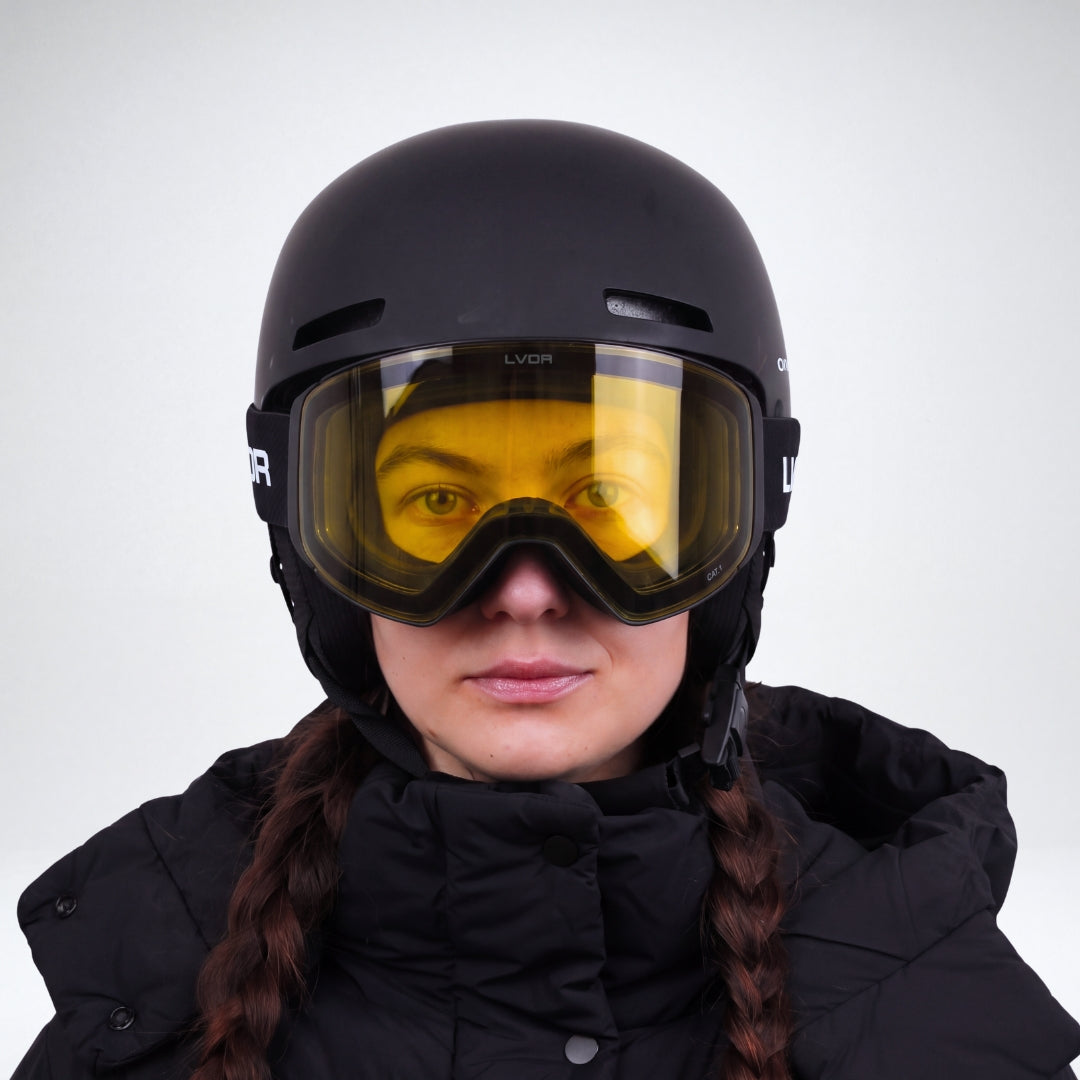
You get the ARC ski goggles with a mirrored main lens of your choice. The yellow fog & snow lens (Nebel & Schnee) comes free with every ARC.
| Lens | Category and use |
|---|---|
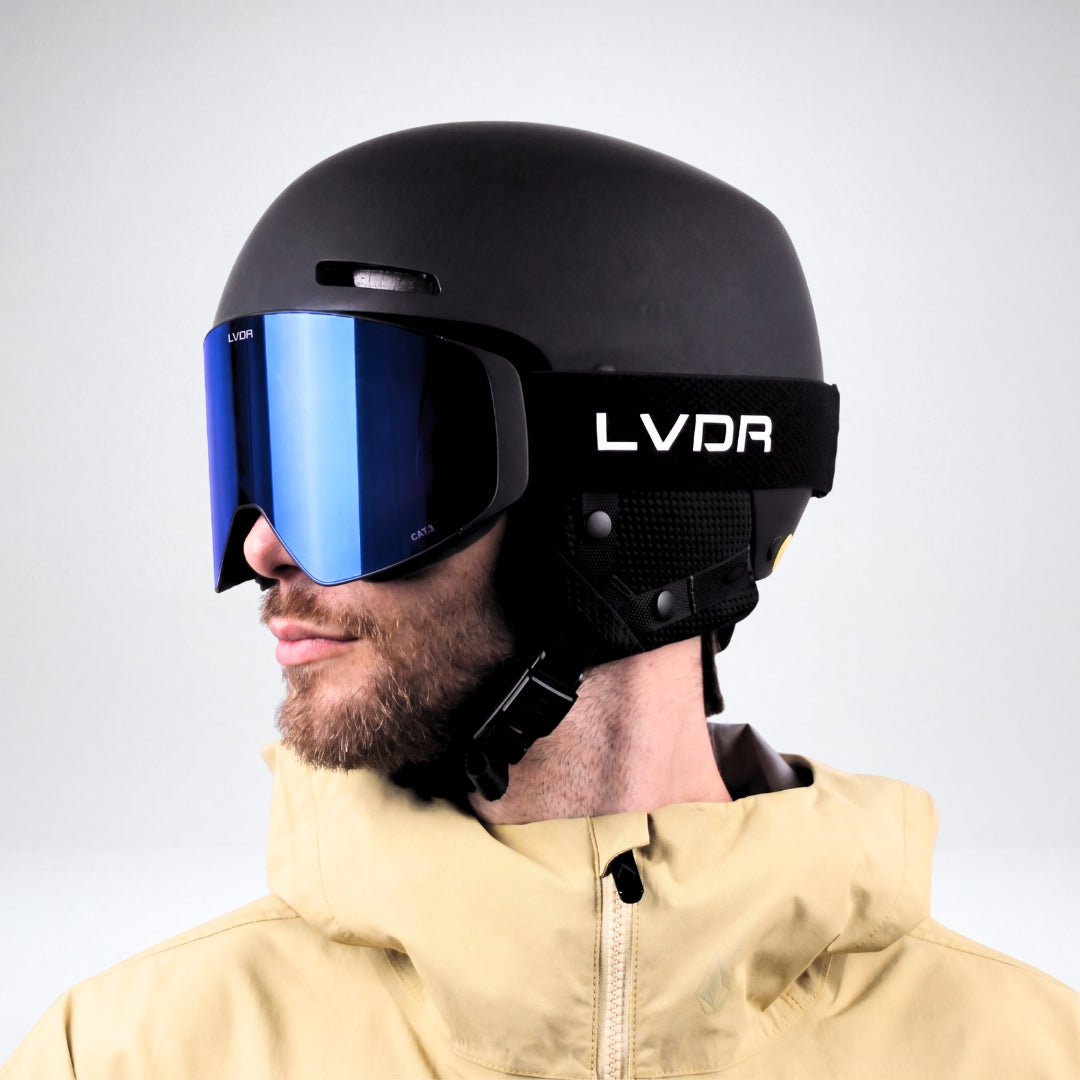
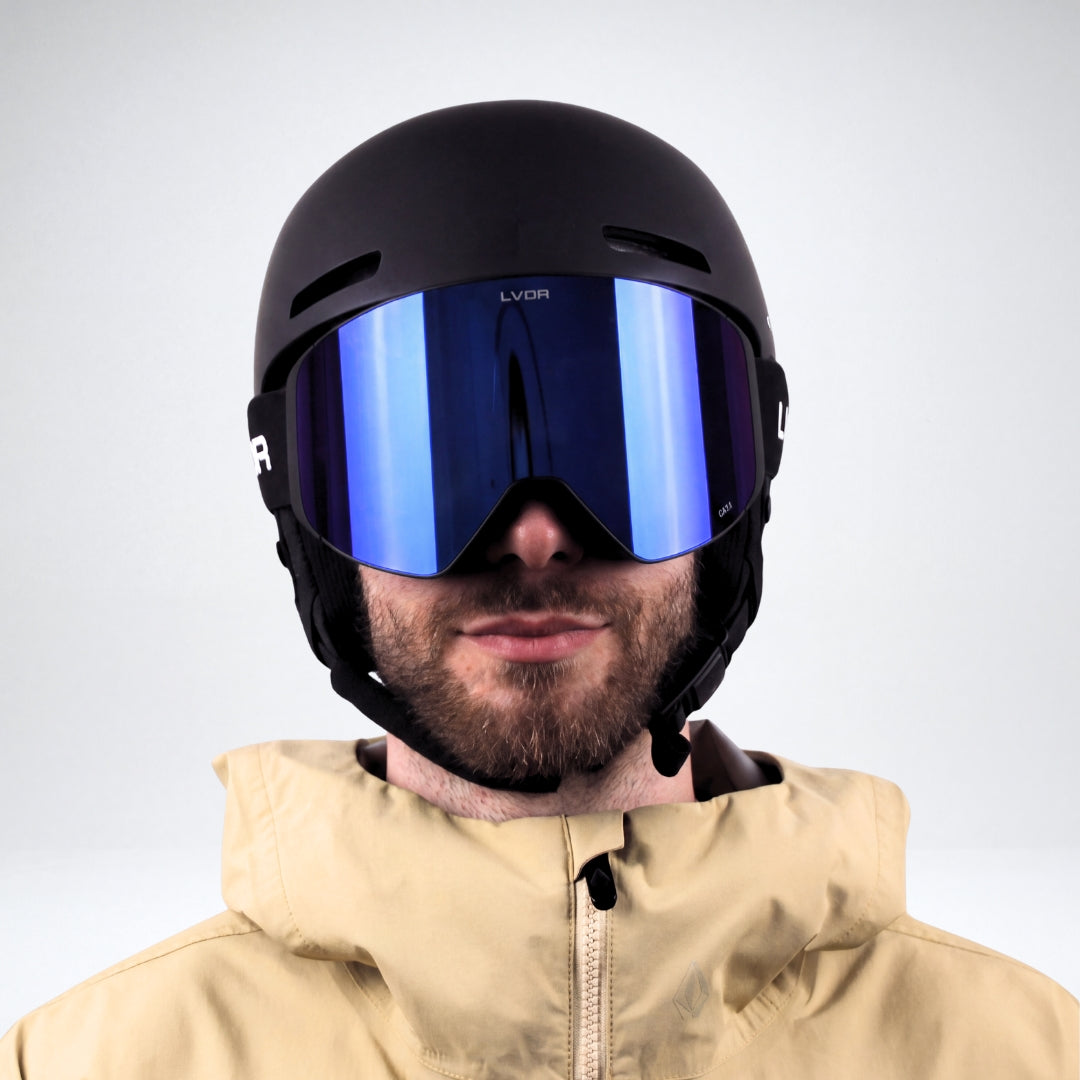
| Chrome Mirror | CAT.3, lots of sun |
| Blue Ice | CAT.3, lots of sun |
| Red Fire | CAT.2, sun and cloud |
| Aurora | CAT.2, sun and cloud |
| Yellow fog & snow | CAT.1, fog, snowfall, flat light |
| Cherry Pink, photochromic | CAT.0–3, for changing light |
The Cherry Pink photochromic lens is optional and only fits the new ARC, not the previous generation. Lenses are changed with the MagSnap magnetic system, and a swap takes seconds, even with gloves. How it works is explained in the article Ski goggles with interchangeable lenses.
- You mainly ski in good weather and in high resorts: Chrome Mirror or Blue Ice, plus the yellow lens for bad days.
- You ski in all weathers: Red Fire or Aurora as an all-rounder, plus the yellow lens.
- You want to swap as rarely as possible: add the photochromic Cherry Pink as well.
What the ARC doesn't offer is a category 4 lens or polarised lenses. For glacier tours with extreme light, dedicated glacier glasses are therefore the better choice.
Frequently asked questions
Which ski goggle lens colour works in all weather?
There's no single colour for all conditions. An S2 lens in orange or red comes closest, but it's too light in bright high-altitude sun and too dark in thick fog. If you ski in all weathers, you're better off with two lenses or a photochromic lens.
Is an S3 ski goggle lens too dark on cloudy days?
Yes, in heavy cloud, fog or snowfall S3 is usually too dark. You see contours less well and tire faster. A second, light S1 lens or a photochromic lens solves this.
What's the difference between S3 and CAT.3?
None; both refer to the same filter category with 8 to 18% light transmission. The ski goggle standard uses the abbreviation S, while many manufacturers write CAT. for category.
Can ski goggles be photochromic and polarised?
Yes, there are lenses that combine both. Bear in mind, though, that on the piste polarisation also dulls the sheen of icy patches. The ARC's lenses aren't polarised; the Cherry Pink lens is photochromic.
Do I need S4 ski goggles for a glacier?
In sunshine on a glacier, S4 makes sense, because ice and snow reflect an extreme amount of light there. For normal pistes S4 is too dark; S3 is enough.
For most skiers, the best solution is a dark lens for sunshine plus a light one for fog, or a photochromic lens. With the ARC ski goggles and their extra yellow lens, you have both from the start. Everything else about buying is in our ski goggles buying guide.