Ski goggles and helmet: which goggles fit and how should they sit?
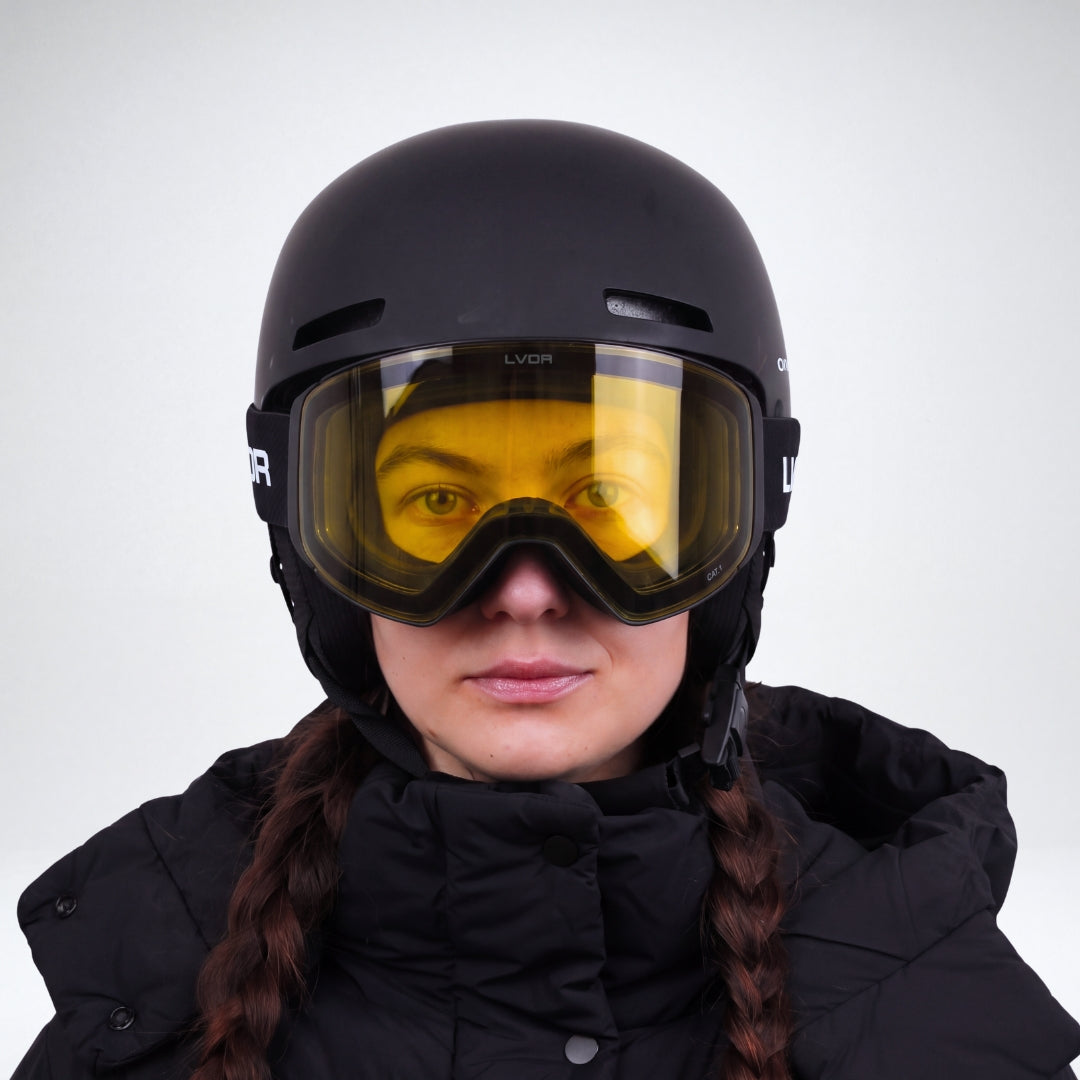
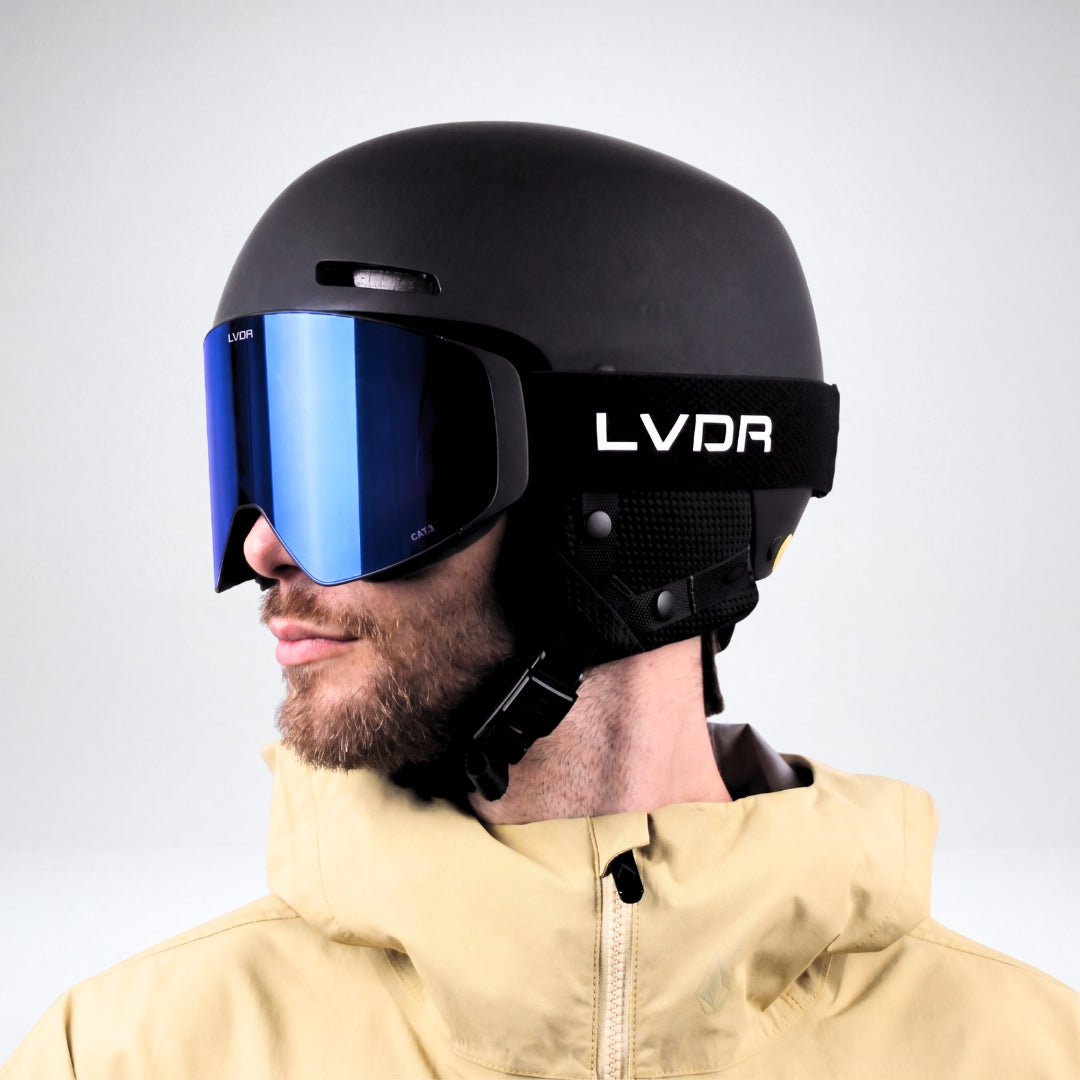
The ski goggles that suit your helmet are the ones whose top frame meets the helmet edge without a gap, without the helmet pushing them down onto your nose. The brand doesn't matter; what counts is the shape of the helmet edge and the goggle frame. The only way to know whether they work together is to try on helmet and goggles at the same time.
Here you'll find a check for trying them on, instructions on how ski goggles should sit, and fixes for the typical problems: pressure on your nose, a gap at your forehead, a slipping strap and glasses fogging up underneath.
Which ski goggles fit which helmet?
The right goggles are the ones whose top frame edge sits flush against the helmet edge, with no gap and no pressure. There's no fixed match by brand or size, because helmets differ in how low and how rounded they are cut at the front, and goggle frames differ in height.
Matching sets from one brand are often designed to work together, but you don't need one. The German consumer organisation Stiftung Warentest advises buying helmet and goggles together or taking your existing goggles along when you try on helmets, because that's the only way to avoid pressure points or a gap (Stiftung Warentest on ski and snowboard helmets). In its helmet tests, the German motoring club ADAC also assesses whether the goggles suit the helmet, stay in place and sit flush with the helmet rim.
Checklist: do your ski goggles and helmet fit together?
Put both on, stand in front of a mirror and go through these points:
- No skin is visible between the top of the goggles and the helmet.
- The helmet doesn't push the goggles down; they rest on the bridge of your nose, not on your nostrils.
- You can breathe freely through your nose.
- The foam makes even contact all the way round, including at the cheekbones.
- The vents at the top of the goggle frame stay clear.
- The strap lies straight on the helmet shell and doesn't slip when you shake your head.
- When you look up and to the side, neither the helmet rim nor the goggle frame gets in the way.
How should ski goggles fit?
Ski goggles fit properly when the foam makes even contact all the way round, nothing presses on your nose or cheeks, you can breathe freely through your nose and the goggles don't slip when you shake your head. With a helmet, there's one more point: the frame meets the helmet edge at the top.
How to put ski goggles on over a helmet: step by step
- Adjust the helmet first: According to Stiftung Warentest, you measure your head circumference just above the eyebrows and adjust the helmet with the dial and chin strap. It mustn't press, but it mustn't slip either.
- Loosen the strap: Open the buckles far enough that you can get the goggles over the helmet without pulling.
- Goggles to your face, strap over the helmet: Hold the goggles over your eyes with one hand and pull the strap back over the helmet shell with the other.
- Push the goggles up to the helmet edge: Push the frame up until it sits flush against the helmet edge and the nose bridge of the goggles rests freely on the bridge of your nose.
- Centre and tighten the strap: The strap sits in the middle and is the same length on both sides. Tighten it until the goggles sit securely without pressing into your face.
- Movement test: Shake your head, look down at your ski tips and look up. Check the fit again after your first run.
How tight should ski goggles be?
Tight enough that they don't slip when you shake your head, and loose enough that the foam isn't pressed into your face. Light marks after taking them off are normal; painful pressure points or restricted breathing through your nose are not.
You tighten the goggles using the buckles on the strap, by the same amount on both sides. If they still sit loosely with the strap pulled tight, the frame is usually too big for your face.
Ski goggles slipping off your helmet: what helps?
- Silicone on a smooth shell: Many straps have silicone or rubber grips on the inside. They hold best directly on the smooth helmet shell, not on a fabric cover.
- Use the goggle clip: Many helmets have a clip or loop at the back that holds the strap in place.
- Re-tighten the strap: A stretched strap no longer holds. If you can't get it taut any more, it's time for new goggles or a new strap.
- Keep the strap centred: If it sits too high on the curve of the helmet, it slips off more easily.
Ski goggles pressing on your nose: what can you do?
Usually the helmet is pushing the goggles down or the strap is too tight. First loosen the strap and position the goggles higher against the helmet edge. If that doesn't help, the frame shape doesn't suit your nose or your helmet.
| Cause | What helps |
|---|---|
| Helmet pushes goggles down | Wear helmet higher, push goggles up to the helmet edge |
| Strap too tight | Loosen until the foam rests without pressure |
| Frame too big for your face | Try a smaller size or narrower frame |
| Flat nose bridge | Try a model with a low bridge fit |
| Prescription glasses add pressure | OTG goggles, flat frame or contact lenses |
| Foam flattened | Replace the goggles, the foam no longer cushions |
Take pressure on your nose seriously, even if you barely notice it in the shop. The German Board for Good Vision (Kuratorium Gutes Sehen) points out that even small pressure points on the bridge of the nose become annoying over a long day in the snow (sehen.de: ski goggles). If, on the other hand, cold air gets in at your nose, the frame is standing away from your face there and doesn't suit the shape of your nose bridge.
Why do my ski goggles only press with a helmet on?
Because the helmet edge presses on the top of the goggle frame and pushes the goggles down onto your nose. This happens when the helmet sits too low on your forehead or the goggle frame is too tall for that helmet. Wear the helmet slightly higher and readjust it. If the pressure remains, you need goggles with a lower frame or a helmet with a differently shaped front.
Which ski goggles put the least pressure on your nose?
The ones whose nose bridge suits the shape of your nose and whose size suits your face. Soft, multi-layer foam spreads pressure better than a single thin layer. If you have a flat nose bridge and high cheekbones, a low bridge fit often works better: the frame and foam are shaped at the nose and cheeks so that the goggles don't slide down onto your nostrils. There are no goggles that sit without pressure on everyone.

Goggle gap: how to close the gap between helmet and goggles
The goggle gap is a strip of bare forehead between the top of the goggles and the helmet. You close it by wearing the helmet slightly lower on your forehead, pushing the goggles higher or choosing goggles with a taller frame. It's also mockingly called the ‘gaper gap’, because it's seen as the mark of a beginner.
It's still a real problem, and not just a cosmetic one. Cold wind hits your forehead directly there, and the skin is exposed to the sun. Germany's Federal Office for Radiation Protection (BfS) points out that freshly fallen snow reflects up to 90 per cent of UV radiation and recommends sunscreen with at least SPF 30, preferably 50, for uncovered skin (BfS: UV protection in winter).
How to get rid of the gap:
- Check how your helmet sits: A helmet that has slipped back towards your neck opens a gap at the front. It belongs level on your head.
- Adjust the goggles: Push the frame up to the helmet edge and re-tighten the strap.
- Try a different combination: If the gap remains, the frame height doesn't suit your helmet. Then the only fix is goggles with a taller frame or a helmet that reaches lower at the front.
The aim is a seamless fit with no visible skin, with the vents at the top of the goggle frame left clear. If the helmet blocks the vents, moist air builds up and the lens fogs. Some helmets have vent channels at the front that draw warm air out of the goggles. The goggle frame should then sit directly beneath them.
Ski goggles over or under the helmet?
Over the helmet. Pulling the strap over the outside of the helmet shell is the standard: helmets and goggle straps are designed for it, and you can get to your goggles quickly even with gloves.
Wearing ski goggles under the helmet is mainly seen among freestylers, mostly for the look. The strap then sits between your head and the inner padding and can change how the helmet fits, since it was adjusted without a strap underneath. You also can't take the goggles off without loosening the helmet. If you wear them this way anyway, readjust the helmet with the goggles underneath and check that it sits firmly and straight.
Pushing ski goggles up onto your helmet during breaks?
Yes, on the helmet is better than on your forehead or hat. According to the Kuratorium Gutes Sehen, any anti-fog coating is useless if the goggles are repeatedly pushed up over a hat – they fog up. If you ski with a helmet, you don't have this problem. Put the goggles back on before you set off, not once you're already skiing.
Glasses fogging up under ski goggles: what helps?
Warm, moist air from your face builds up between the ski goggles and your prescription glasses and condenses on a cooled lens. What helps: ski goggles with enough room and good ventilation, clear vents and prescription glasses treated with an anti-fog product.
- Keep the vents clear: The helmet mustn't cover the goggle vents. Clear snowed-up vents now and then.
- Redirect your breath: Don't pull your neck gaiter or face mask up under the lower edge of the goggles, otherwise your breath flows straight into them.
- Treat your prescription glasses: An anti-fog spray or wipe for spectacle lenses helps prevent fogging.
- Check the space: If the arms or frame of your glasses touch the goggle lens from the inside, you get scratches and air circulates less well.
- Arms under the helmet: The helmet padding shouldn't press the arms of your glasses against your head. So always try the helmet on with your glasses.
For glasses wearers, Stiftung Warentest names visor helmets as a comfortable alternative: your glasses fit under the visor and fog up less often thanks to better air circulation. If you prefer classic ski goggles, you'll find everything about fit, size and fogging in our guide Ski goggles for glasses wearers. Care tips against fogged lenses, including for the foam, are in How to clean ski goggles and stop them fogging up.
The ARC ski goggles on a helmet
The ARC ski goggles are compatible with common ski helmets. The strap has a silicone strip that grips the helmet shell, and three-layer comfort foam rests against your face. They're unisex, but not OTG goggles: they can't be worn over prescription glasses.
To be honest: ‘common helmets’ doesn't mean ‘every helmet’. Because helmet edges are shaped so differently, no ski goggles can guarantee a gap-free fit on every model. So do the mirror check from this article at home with your own helmet before you hit the slopes.
The ARC's lenses are cylindrical, meaning flat vertically – what that means is explained in Spherical vs cylindrical ski goggles. They're changed in seconds with the MagSnap magnetic system, even with gloves; more on that in the article Magnetic ski goggles: the ARC's lens change system. What to look out for when buying is summed up in our ski goggles buying guide.
Frequently asked questions
Do ski goggles and helmet have to be the same brand?
No. Goggles and helmets from different brands can fit together just as well; it's the shapes that matter. The mirror check is what counts: no skin between goggles and helmet, no pressure on your nose, clear vents.
Is a small gap between helmet and goggles a problem?
It's mainly unpleasant: cold wind hits your forehead, and the skin can burn in the sun. If you can't close the gap, apply plenty of sunscreen there and try goggles with a taller frame next time you buy.
How should a ski helmet fit?
Level and secure, without pressing. It mustn't slip when you shake your head and is adjusted with the dial and chin strap. If it sits too low, it pushes the goggles onto your nose; if it sits too far back, you get a gap at your forehead.
Do I need a special ski helmet as a glasses wearer?
Not necessarily. What matters is that the helmet padding at the temples doesn't press the arms of your glasses against your head and that OTG goggles fit with it. Some helmets leave more room at the temples – always try your favourite on with your glasses.
Can I combine my old ski goggles with a new helmet?
Yes, if the shapes fit together. Take the goggles along when you try on helmets and do the mirror check there. If the foam on your old goggles is flattened or the strap has stretched, new goggles are probably the better choice.
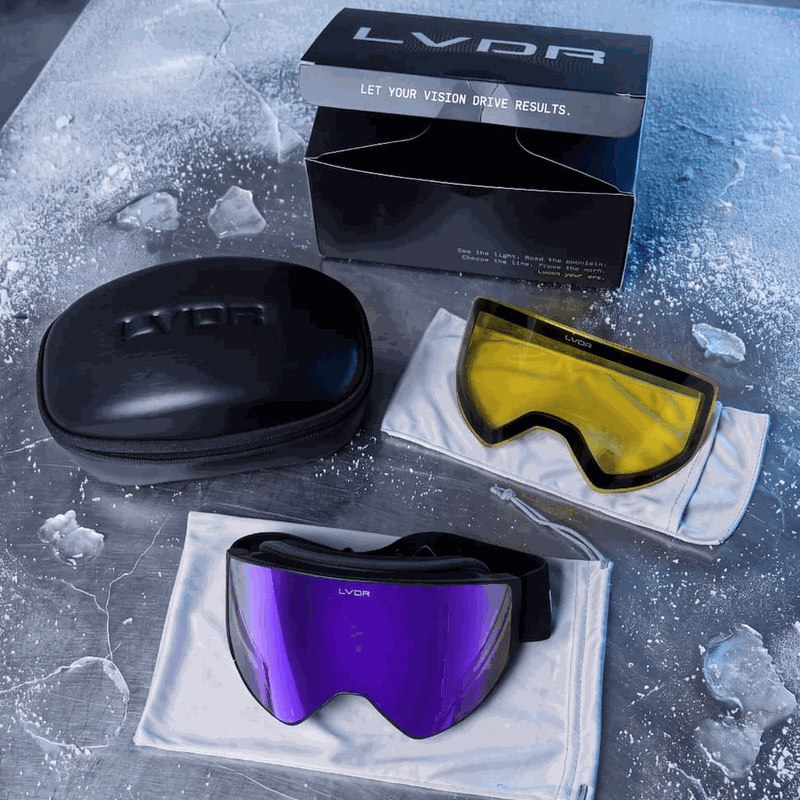
Looking for ski goggles that work well with your helmet? Take a look at the ARC ski goggles with their silicone-grip strap and magnetic interchangeable lens, or browse all our ski goggles.