How to clean ski goggles: caring for the lens, inside and foam
Clean ski goggles with clear, lukewarm water and a clean microfibre cloth: rinse the outside briefly and dab it dry, and only ever dab the inside, never rub it. Then let them dry open at room temperature before they go back into their case. Above all, what you leave out matters: tissues, gloves and cleaning products damage the delicate anti-fog coating on the inside.
Here you'll find instructions for the lens, the inside and the foam, how to store your goggles properly, the most common reasons ski goggles fog up, and what can still be done about scratches or water between the lenses.
How do I clean my ski goggles?
Rinse dirt off with lukewarm water, let the goggles air-dry and then dab off any residue with a clean microfibre cloth. This is also what the German consumer organisation Stiftung Warentest recommends, citing the Swiss magazine K-Tipp: clear water, air-drying and at most a careful dab with a lens cloth.
How to clean the outside of the lens:
- Tap off the snow: Tap loose snow off the frame instead of wiping it away. Otherwise ice crystals and dirt scratch the lens.
- Rinse: Hold the outside of the lens briefly under lukewarm running water. This rinses away sand, dust and salt from sweat before they cause scratches when you wipe.
- Let it drip dry: Shake off the water and let the goggles air-dry.
- Dab: If water marks remain, dab them off the outside with a clean microfibre cloth without pressing.
Don't use hot water. According to the German Board for Good Vision, Kuratorium Gutes Sehen (KGS), water that's too hot can damage lens coatings. Fibres from tissues and kitchen roll leave micro-scratches that can't be removed.
What can I clean my ski goggles with?
Clear water and a clean microfibre cloth, or the microfibre pouch that comes with many ski goggles. Anything else is unnecessary or harms the lens and coating.
| Product | For ski goggles? |
|---|---|
| Lukewarm clear water | Yes, outside and inside if needed |
| Microfibre cloth or pouch | Yes, clean and dry |
| Tissues, kitchen roll | No, fibres scratch |
| Gloves, sleeve, scarf | No, scratches and damage inside |
| Glass cleaner, alcohol | No, attacks coatings |
| Washing-up liquid | Never inside, outside only if the maker allows |
| Anti-fog spray | Not on an intact anti-fog coating |
| Hairdryer, radiator | No, heat causes damage |
Wash the microfibre cloth regularly, according to the KGS at no more than 40°C and without fabric softener. Otherwise a dirty cloth rubs exactly the particles you want to remove into the lens. Similar rules apply to sports and cycling glasses; the details are in our guide How to clean and care for sports glasses.
Cleaning the inside of ski goggles: dab, don't wipe
Clean the inside as rarely as possible: shake out snow, let the goggles dry open and then only dab marks with a clean microfibre cloth. The anti-fog coating is on the inside, and it can't take rubbing.
This coating absorbs moisture and spreads it as a thin, transparent film instead of letting droplets form. That makes it much softer than the outside. If you wipe it while it's damp, you smear it or gradually rub it off.
How to clean ski goggles on the inside:
- Shake out snow and water droplets; don't wipe them out.
- Let the goggles dry open at room temperature, away from the radiator.
- Only once the inside is completely dry, dab marks with a clean microfibre cloth: light contact, no circular movements.
- For fingerprints or splashes on the inside, wet it briefly with lukewarm water, shake it off, let it dry and then dab.
Ski goggles smeared on the inside: what can you do?
Smears on the inside usually appear when someone has wiped the damp inside. Rinse the inside once briefly with lukewarm water, shake it off and let it dry completely without touching it. If the smears are still there afterwards, the coating is damaged at that spot, and only a new lens will help.
How to clean ski goggle foam
Clean the foam with a soft cloth dampened with lukewarm water: dab, don't rub and don't soak. It then has to dry completely before you pack the goggles away.
The foam soaks up sweat, skin oil, sunscreen and make-up. It's glued to the frame and sits right next to the inside of the lens. So the rule here is: as gently and as dry as possible.
- Remove the lens if you can: On ski goggles with an interchangeable lens, take the lens off first. That way no water gets onto the anti-fog coating.
- Dab: Dab the foam with a damp, soft cloth. For sunscreen or make-up, it's better to dab several times with fresh water than to press harder.
- Don't wring: Don't squeeze the foam or pull at it, otherwise it comes away from the frame.
- Dry: Let the goggles dry open at room temperature, ideally overnight.
Never submerge the goggles in water. Soaked foam takes a long time to dry, and the remaining moisture ends up as fog on the lens on your next ski day. Leave out soap and detergent, because residue is hard to rinse out of the foam and can get onto the inside of the lens.
If the foam smells musty, it has usually been packed away damp too often; thorough drying helps. If it crumbles or comes away from the frame over a large area, it can hardly be repaired permanently. Cold air and snow then get in, and the goggles need replacing.

How do I clean and store my ski goggles properly?
After a day's skiing, let the goggles dry open at room temperature, then put them in their microfibre pouch and case. Over the summer, store them somewhere dry, dark and not too warm.
- In the evening: Take the goggles off the helmet and lay them down open, not on a wet hat and not in the damp helmet shell. Radiators and hairdryers are off limits, because heat damages foam, glue and coating.
- In the morning: Only put on dry goggles. Damp goggles will fog up on the first lift.
- On the go: Never put the goggles loose in a backpack or jacket pocket: keys and zips scratch the lens. According to Stiftung Warentest, they belong in a suitable case off the slopes.
- In summer: Store them dry and dark, for example in a cupboard, not in a hot car or in the loft. Before your first run of the new season, check the lens, foam and strap.
Ski goggles fogging up: how to prevent it
If your ski goggles fog up, there's usually not enough air exchange: the vents are covered, your breath is rising in from below, the goggles were on your forehead or they're too tight. Check these points first. If they fog up faster and faster despite correct use, the anti-fog coating is probably damaged.
The reason is simple physics. Behind the lens the air is warm and moist, because your face gives off heat and sweat. The lens, on the other hand, is cold. When the moist air cools on the inside, the water vapour condenses into fine droplets, and it's like looking through frosted glass.
According to the Kuratorium Gutes Sehen, an anti-fog coating, a double lens and good ventilation help against fogging. The KGS also warns that if the goggles sit too tightly, air can't circulate and the lenses fog up. This overview helps you find the cause:
| When does it fog up? | What helps |
|---|---|
| On the lift or in the queue | Keep vents clear, it clears once you set off |
| Goggles were on your forehead | Keep them over your eyes, take them off fully on breaks |
| Scarf or mask over your nose | Fabric below the nose, breath directed downwards |
| Along the top edge | Clear the vents, check how the helmet sits |
| After a fall in the snow | Shake out, dry, use the spare lens |
| Faster and faster, with smears | Anti-fog coating damaged: replace the lens |
Don't pull the strap tighter than necessary: the goggles should sit without a gap but not be pressed into your face. If your helmet has adjustable vents, open the front ones so moist air can escape upwards out of the goggles. How helmet and goggles fit together is explained in our guide Ski goggles and helmet: how to get the right fit.
Ski goggles fogging up between the lenses
If a double lens fogs up between its two layers, the edge seal is damaged. The air cushion in between is meant to insulate. Once moisture has got in, you can't reach it from the outside with either a cloth or water.
Let the goggles dry open at room temperature; sometimes the fog then disappears for a while. If water keeps coming back between the lenses, only a new lens will help. If the goggles are still new, talk to the retailer.
Does anti-fog spray help ski goggles?
On an intact anti-fog coating you don't need a spray, because the coating does exactly this job. You can't know beforehand whether a product will attack the coating. An anti-fog product only makes sense on a lens whose coating is already damaged, as a stopgap until you get a new lens.
Can you remove scratches from ski goggles?
No, scratches in the lens can't be reliably removed. The KGS describes micro-scratches in spectacle lenses as irreparable, and with ski goggles, polishing also strips away the mirror finish and coating.
Tips from the internet such as toothpaste, polishing paste or car polish abrade the surface. A fine scratch may become less noticeable, but the mirror finish is gone at that spot. On the inside, polishing destroys the anti-fog coating for good.
What matters is where the scratch is. A fine scratch at the edge hardly bothers you. If it's right in your field of vision, it scatters light and causes glare when the sun is low; then a new lens is the better solution. On ski goggles with an interchangeable lens, you only replace the lens, not the whole goggles.
How long do ski goggles last? Lifespan and care
There's no fixed lifespan. With good care, ski goggles last several seasons; with poor care, the anti-fog coating is sometimes ruined after just a few days. What matters is care, storage and how often you ski.
These signs suggest you need a new lens or new goggles:
- They fog up faster and faster despite clear vents and correct use.
- Smears remain on the inside that don't disappear after rinsing and drying.
- Scratches are right in your field of vision or cause glare against the light.
- The foam is crumbling, coming away from the frame or letting air and snow in.
- The strap has stretched, and the goggles slip on the helmet.
- The frame or lens has a crack after a fall.
If you need a new lens anyway, it's worth looking at the tint. Which colour suits which light is explained in our guide Which ski goggle lens colour for which weather?
Caring for the ARC ski goggles
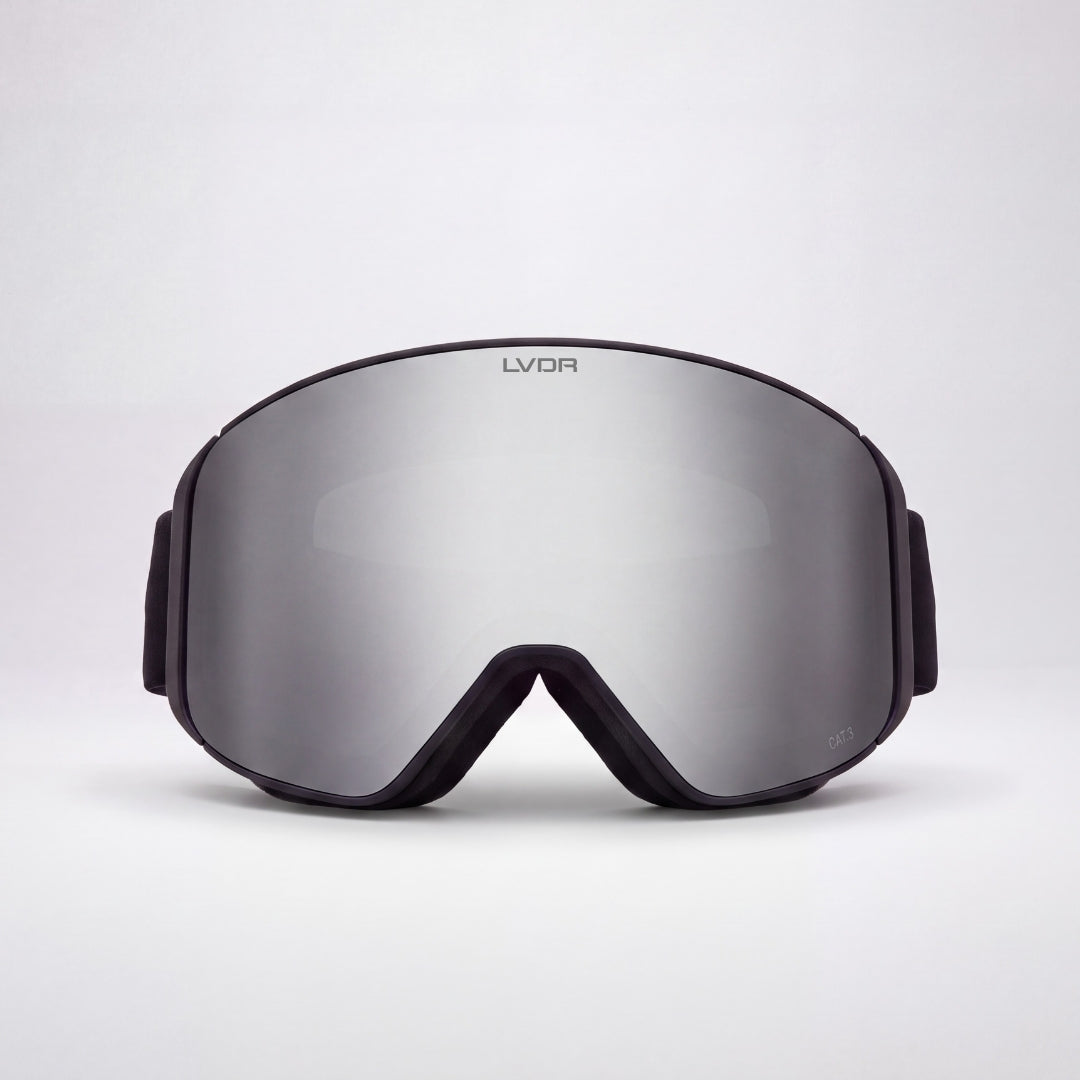
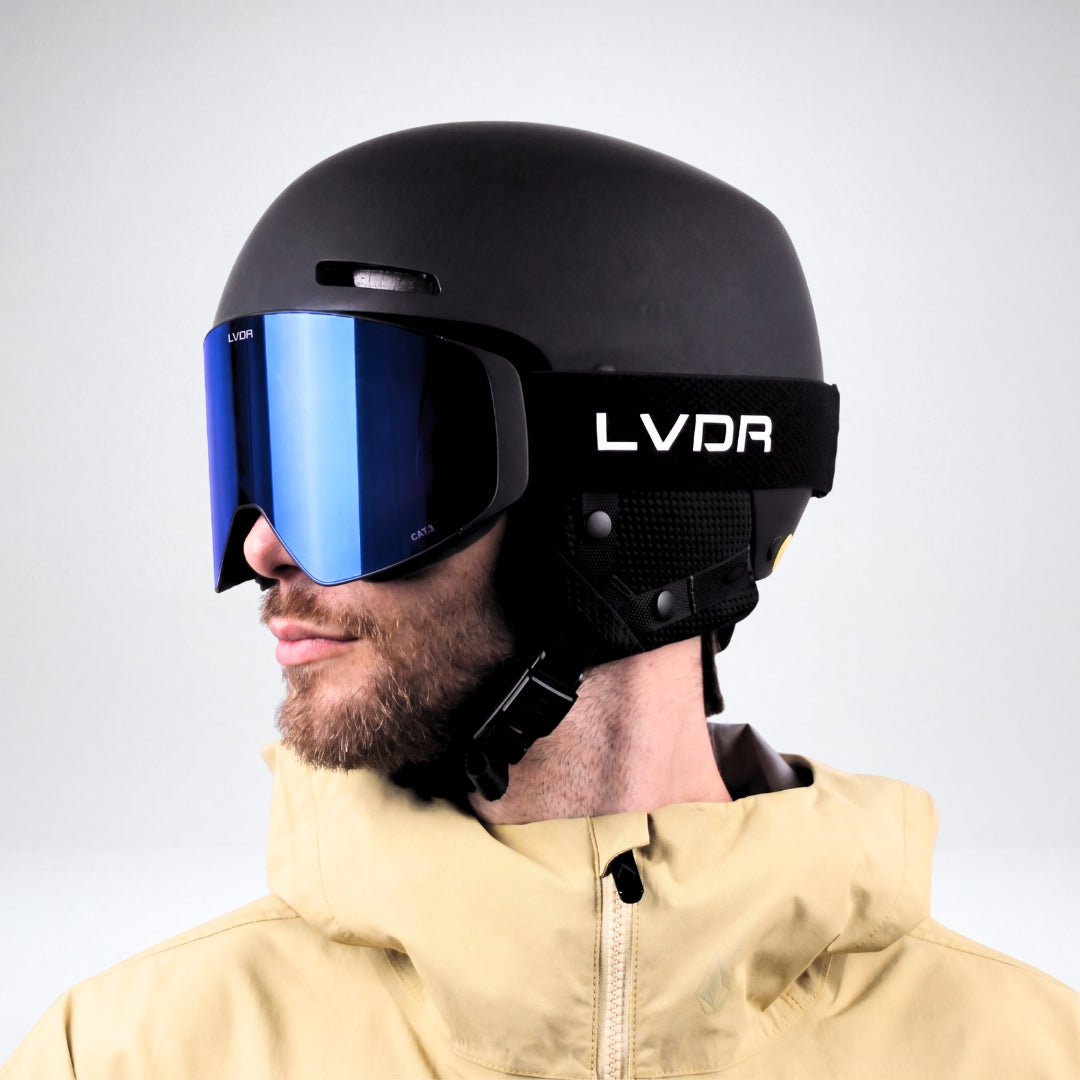
The same rules apply to the ARC ski goggles: gently with water on the outside, only dab the inside, air-dry. They have an anti-fog coating and ventilation, but this coating too only lasts if you don't rub it off.
The MagSnap magnetic system is handy here, as it lets you remove the lens in seconds, even with gloves. That way you can clean the frame and foam without getting water on the inside of the lens. If a lens is wet on the inside after a fall, fit a dry one instead of wiping at it on the slope.
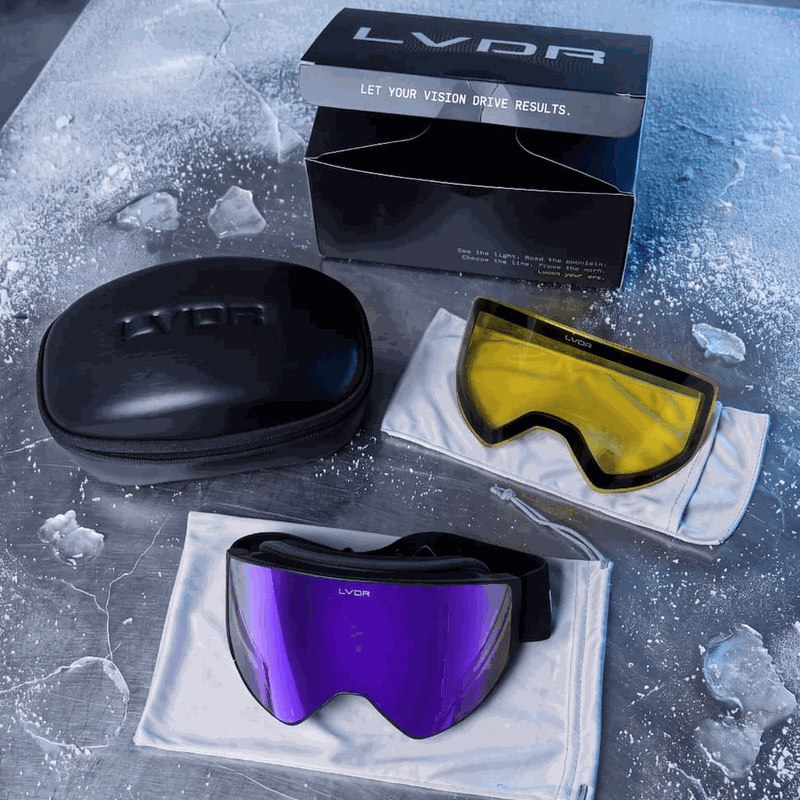
You already have a spare lens, because the yellow fog & snow lens (Nebel & Schnee) comes with every ARC. The box also includes a microfibre pouch for the goggles and lens and a hard case. Use the pouch for dabbing and for the spare lens, and the hard case for transport.
How the magnetic system works is explained in the article Magnetic ski goggles: the ARC's lens change system.
Frequently asked questions
Why do my ski goggles fog up?
Because warm, moist air from your face condenses on the cold inside of the lens. This happens mainly when there's no airflow to carry the moist air away, in other words on the lift, in the queue or when the vents are covered. If they fog up constantly despite clear vents, the anti-fog coating is usually damaged.
Can you renew the anti-fog coating?
No, a factory coating can't be restored. Anti-fog products can help briefly on a damaged lens but don't replace the coating. The only lasting fix is a new lens.
Can I use pre-moistened lens wipes?
Pre-moistened lens wipes are fine for the outside if they don't contain alcohol, because according to the KGS alcohol mainly damages plastic. They're off limits for the inside, because you'd be wiping instead of dabbing.
Can I put ski goggles in the dishwasher?
No. The heat and detergent in a dishwasher attack coatings, glue and foam. Lukewarm water by hand is all you need.
What can I do if my glasses fog up under my ski goggles?
Then you have two surfaces that can fog up, and your prescription glasses often have no anti-fog coating. Keep the vents clear, don't pull your scarf over your nose and ask your optician which anti-fog product will hold on your lenses. More on this in our guide Ski goggles for glasses wearers.
With water, a microfibre cloth and a little patience, your view will stay clear for a long time. If you're looking for new ski goggles with an anti-fog coating and a magnetic interchangeable lens, take a look at the ARC ski goggles or compare the models in our ski goggles collection. What else matters when buying is summed up in our ski goggles buying guide.