Article: Ski goggles with interchangeable lenses: how magnetic systems work
Ski goggles with interchangeable lenses: how magnetic systems work
Ski goggles with interchangeable lenses come with at least two lenses that you swap depending on the light: a dark lens for sunshine and a light one for fog, snowfall and flat light. On magnetic ski goggles, magnets hold the lens in the frame. That's why a swap takes only seconds and works even with gloves on, while traditional systems with a groove or clips involve a lot more fiddling.
Here you'll find out which lens change systems exist, when a second lens is worth it, which lenses you should combine and where the limits of a magnetic system lie.
What are ski goggles with interchangeable lenses?
With interchangeable-lens ski goggles, you can take the lens out without tools and replace it with another. Depending on the brand, the lens may also be called a visor, shield or replacement lens. Usually you get a dark main lens and a light second lens, and sometimes you can buy more lenses separately.
The reason is the light on the mountain. In sunshine you need a dark lens; in fog you need a light one that brings out contours. A fixed lens is always a compromise at one of the two extremes. That's why the German Board for Good Vision (Kuratorium Gutes Sehen) calls winter sports goggles with interchangeable lenses ‘optimal’ (KGS guide to winter sports eyewear).
Everything here applies equally to snowboard goggles. Ski and snowboard goggles are the same product category and fall under the same standard, EN ISO 18527-1.
How do magnetic ski goggles work?
On magnetic ski goggles, small magnets in the frame and on the lens hold the lens in place. To swap, you grip the lens by its edge, pull it off and position the new one until the magnets catch it. Unlike traditional ski goggles, you don't have to bend the frame to do this.
There are two designs:
- Whole lens magnetic: You swap the complete lens. This is how the MagSnap system of the ARC ski goggles works, for example.
- Magnetic overlay lens: A light base lens stays fixed in the goggles. In sunshine you attach a dark lens to the outside, held in place by magnets.
Some manufacturers add a mechanical lock to the magnets, such as a small lever. That gives extra hold but costs you one more step when swapping.

Magnet, clip or frame: lens change systems compared
A magnetic system is the quickest way to change lenses; groove and clip systems take more time and dexterity. How big the difference is in practice was shown by the consumer organisation Stiftung Warentest in its ski goggle test of 13 goggles with interchangeable lenses (issue 1/2013). On most models the whole lens had to be removed and refitted, according to the test ‘only with the goggles taken off and usually only without gloves’. A magnetic system came out best (Stiftung Warentest: ski goggles for quick lens changes).
| System | Strength | Weakness |
|---|---|---|
| Groove in the frame | secure, simple | fiddly to swap |
| Clips or lever | locks firmly | hard work with gloves |
| Magnet | swap in seconds | hold varies by design |
| Photochromic | no swap needed | doesn't tint on demand |
With the traditional groove, the lens sits in a channel running around the soft frame. To change it, you bend the frame open, push the lens out and work the new one in all the way round. In doing so you almost inevitably touch the inside, where the delicate anti-fog coating is.
Are ski goggles with interchangeable lenses worth it?
Yes, if you ski full days and have to take the weather as it comes. If you only ski in sunshine and would rather head to the mountain hut when it's foggy, a single lens in category S2 or S3 is often enough.
- Ski holiday over several days: Interchangeable lenses are worth it because you want to ski every day, whether it's sunny or snowing.
- Early starts or skiing until the last lift: When the slope is in shadow, a dark lens is too dark. With the light lens you can make out bumps and tracks again.
- Changeable weather: When clouds roll in, the light lens brings the contrast back.
- Only fair-weather days: A good dark lens is enough.
- You don't want to swap anything: A photochromic lens that adjusts its tint by itself is more convenient.
Which interchangeable lenses do you need?
A dark lens for sunshine plus a light lens for poor visibility is a tried-and-tested combination. How dark a ski goggle lens is depends on its filter category, from S0 (almost clear) to S4 (very dark). For normal ski days, S2 or S3 as the main lens and S1 as the second lens are enough.
| Your typical ski day | Sensible combination |
|---|---|
| Lots of sun, high ski resorts | S3 dark + S1 light |
| Changeable weather | S2 medium + S1 light |
| Afternoons and under floodlights | S2 medium + S0 clear |
| Don't want to swap | photochromic lens, around S1–S3 |
A simple rule helps with colour. Yellow and orange lenses boost contrast in dull weather and snowfall, while grey and brown lenses cut the light in sunshine. Which colour and category suit which weather is explained in our guide to ski goggle lens colours and filter categories by weather.

How to change ski goggle lenses in five steps
Take the goggles off, pull the lens off by its edge and position the new one centrally until the magnets catch. Here's how to avoid scratches and snow in your goggles while you do it:
- Find a sheltered spot, for example at the hut or at the top station. Better not to swap on an open chairlift, because a dropped lens is gone.
- Hold the goggles with the inside facing down so no snow falls in.
- Grip the lens by its outer edge and pull it off. Don't touch the inner surface.
- Put the removed lens straight into its microfibre pouch.
- Position the new lens centrally, press it lightly all the way round and check that it sits flush everywhere.
With traditional groove systems the process is similar, but you have to bend the frame open and fit the lens bit by bit. That's much easier indoors than outside with cold fingers.
Carrying and caring for interchangeable lenses
- Protect the spare lens: Always carry it in its own pouch in an inside pocket, never loose next to your keys or phone.
- Don't wipe the inside: Only dab moisture on the inside or let it dry, because rubbing damages the anti-fog coating.
- Keep contact surfaces clean: Snow, ice or sand between magnet and frame stop the lens from sitting flush.
- Dry after a day's skiing: Let the goggles and lenses dry open at room temperature, not on the radiator.
How to clean the lens and foam and what helps against fogging is covered in our guide How to clean ski goggles and stop them fogging up.
Pros and cons of magnetic ski goggles
The biggest advantage is the quick, clean swap; the biggest drawback is the second lens you have to carry. In detail:
- Pro: Swap in seconds, even with gloves.
- Pro: You barely touch the inside, which protects the anti-fog coating.
- Pro: You ski with the lens that suits the light instead of a compromise.
- Con: The second lens has to come with you and needs protecting.
- Con: Interchangeable lenses only fit the model they're made for, often not even the previous generation.
- Con: A magnetic system does nothing against fogging. That's down to the anti-fog coating, the ventilation and how you use your goggles.
- Con: How securely the lens stays in place in a fall depends on the magnets and the fit. Always check afterwards that it still sits flush.
Photochromic or interchangeable lenses: which is better?
An interchangeable lens is faster and more targeted; a photochromic lens is more convenient. Photochromic lenses darken under UV radiation and lighten again without UV. According to Spektrum's Lexicon of Optics, darkening happens quickly and lightening more slowly, and both also depend on temperature.
With interchangeable lenses you decide for yourself, for example by choosing a yellow lens in thick fog. A photochromic lens makes the decision for you, but it only reacts to UV light and therefore stays light under floodlights. With a magnetic system you don't have to commit and can use both.
The ARC ski goggles with MagSnap
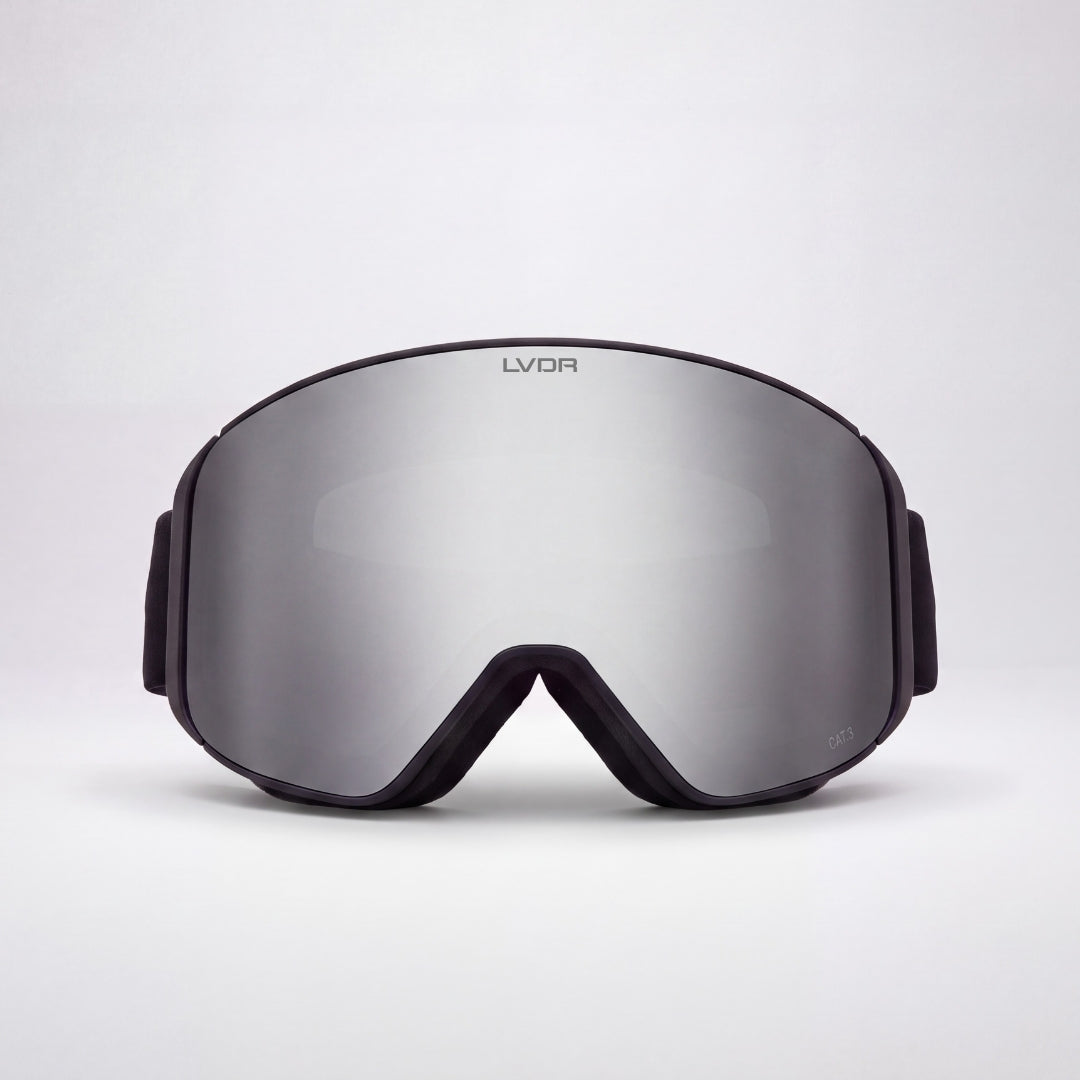
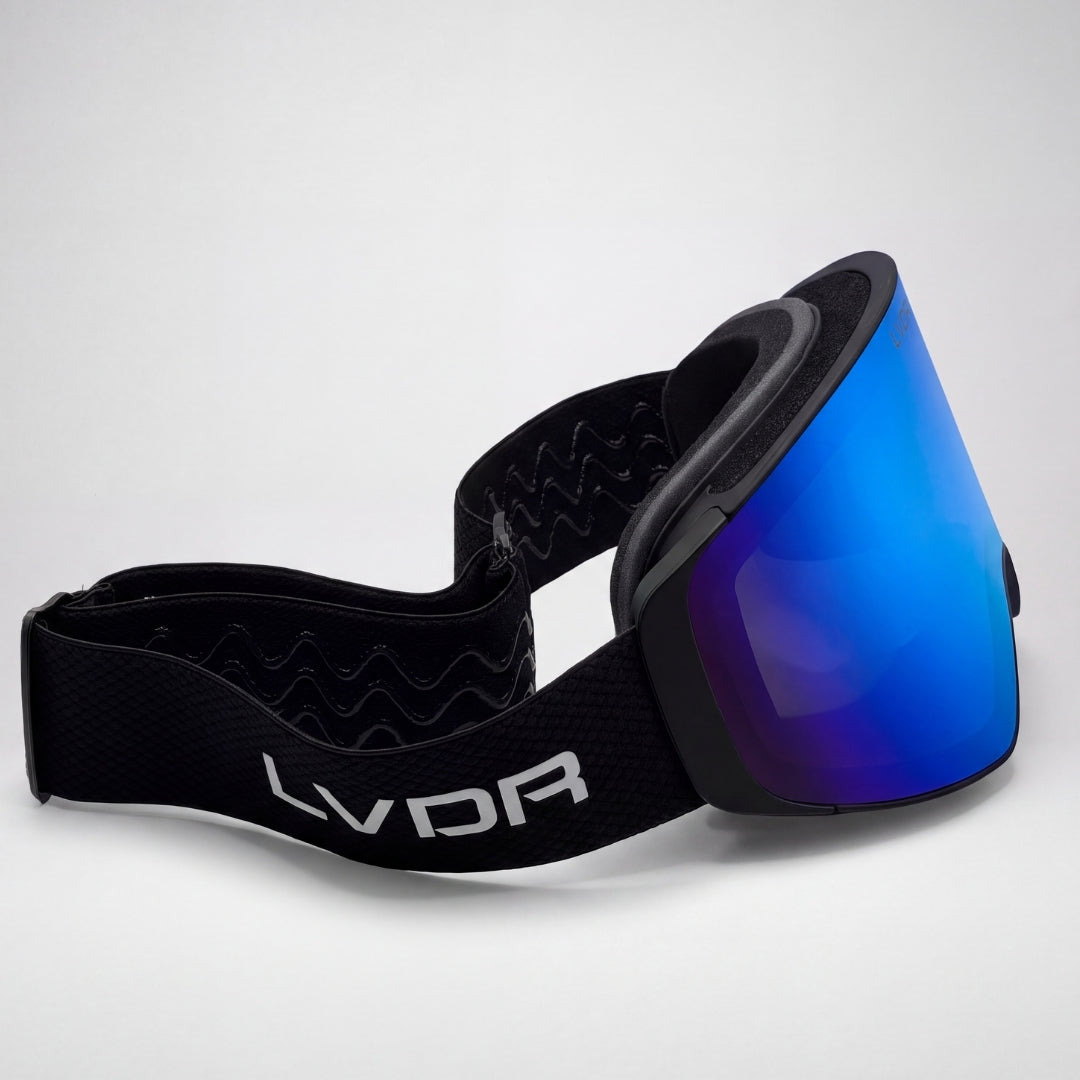
The ARC ski goggles hold their lens with the MagSnap magnetic system, made up of 10 grade N52 neodymium magnets. Lens changes take seconds, even with gloves. All lenses are cylindrical, meaning curved horizontally and flat vertically. What that means for your vision is explained in our guide Spherical vs cylindrical ski goggles.
- Chrome Mirror and Blue Ice (CAT.3): mirrored, darker, for lots of sun.
- Red Fire and Aurora (CAT.2): mirrored, slightly lighter, for changing light.
- Yellow fog & snow lens (Nebel & Schnee, CAT.1): light, for flat light, fog and snowfall. It comes free with every ARC and isn't sold separately.
- Cherry Pink photochromic (CAT.0–3): an optional lens that adjusts its tint automatically. It only fits the new ARC, not the previous generation.
What N52 means: the grade describes the maximum energy product of the magnet material, and commercially available grades range from N35 to N52 (explanation of N grades). The holding force on the lens, however, also depends on the size, number and arrangement of the magnets.
On top of that come a double lens, anti-fog coating, ventilation, UV400 and a wide field of view. The ARC is unisex and compatible with common helmets. It isn't OTG goggles designed to be worn over prescription glasses. Along with the goggles with your main lens and the yellow lens, the box includes a premium hard case styled like a snow boot and a microfibre pouch for the goggles and lens.
The ARC has its limits too. Its lenses aren't polarised, and there's no category 4 lens. For glaciers with extreme light, dedicated glacier glasses are the better choice. You'll find all the buying criteria at a glance in our ski goggles buying guide.
Frequently asked questions
Does a magnetic lens stay on in a fall?
Magnetic systems are designed to hold the lens securely while you ski and still let you pull it off deliberately. How much a lens can withstand in a hard impact depends on the magnets and the fit. After every fall, check that the lens sits flush all the way round and is undamaged.
Do lenses from other ski goggles fit?
No. Interchangeable lenses are made for the shape and fixing of a specific model and generally won't fit goggles from other brands. There are often differences even between two generations of the same model, and that's the case with the ARC too.
What are ski goggles with a magnetic face mask?
This usually means a face mask that attaches to the goggle frame with magnets and protects your nose and mouth from the cold. It has nothing to do with interchangeable lenses. On the ARC, the magnets only hold the lens, and a face mask isn't included.
Are there interchangeable-lens ski goggles for glasses wearers?
Yes. What matters is that the goggles, as an OTG model (over the glasses), offer enough room for your prescription glasses; the lens system makes no difference. What to look out for is explained in our guide Ski goggles for glasses wearers.
Are there magnetic ski goggles for women?
Many magnetic ski goggles are unisex, including the ARC. What counts isn't the label but whether the frame and foam suit your face and your helmet. How to check the fit is shown in the article How to match ski goggles and helmet.
If you ski full days and the light keeps changing, ski goggles with magnetic interchangeable lenses are the most practical solution. The ARC ski goggles come with the MagSnap system and the yellow fog lens. If you want to swap as rarely as possible, add the Cherry Pink photochromic ARC lens. You'll find all models in our ski goggles collection.